
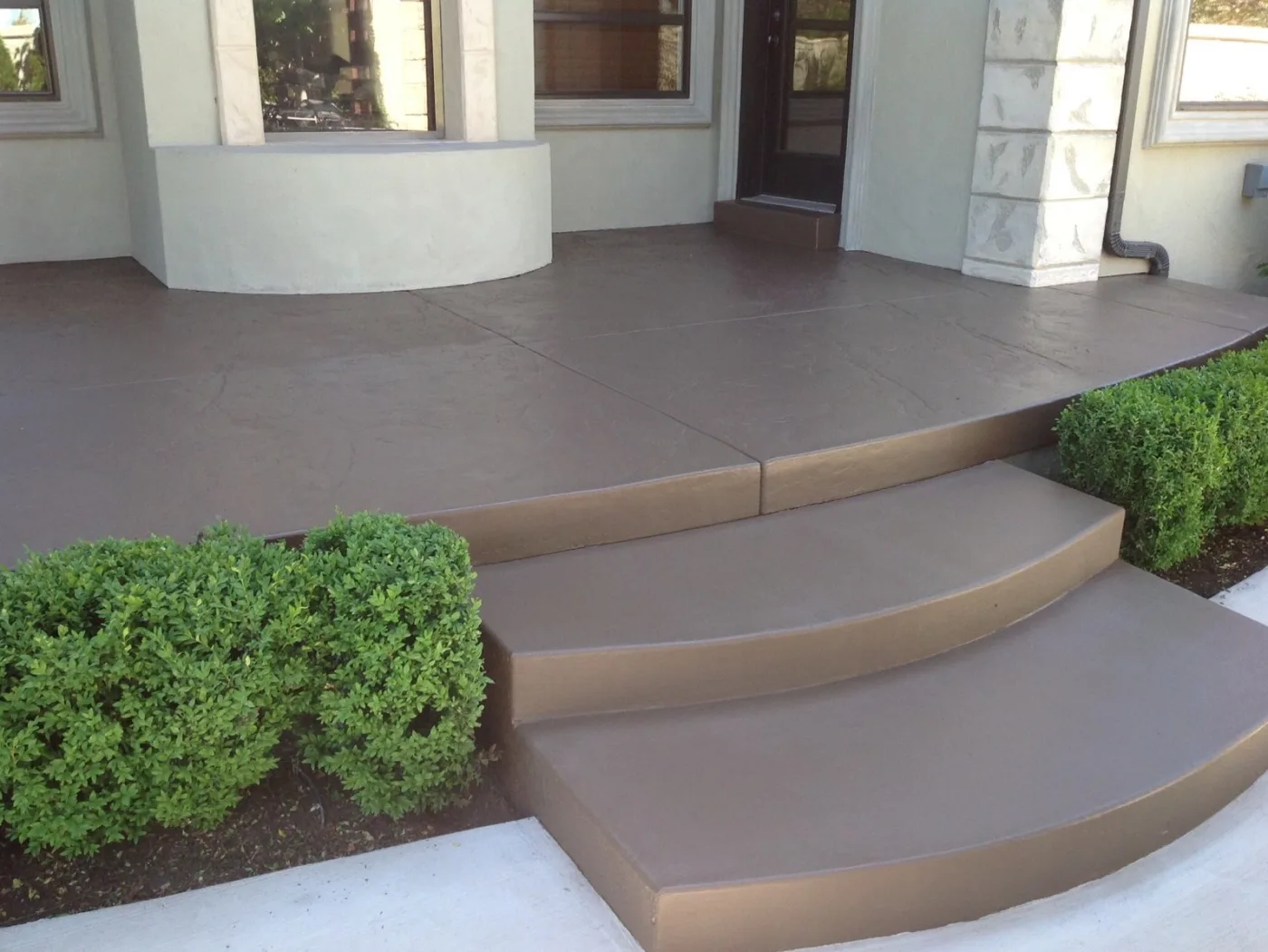
Should you seal a concrete driveway in Utah? Pros, cons and cost
Yes, for most sound concrete driveways in Utah, and a penetrating silane or siloxane sealer is the usual pick. It keeps water and road salt out of the pores, where winter does its damage. HomeGuide puts professional sealing at $1 to $3 per square foot. A cracked or flaking slab needs repair first.
Complete Concrete Coatings has sealed concrete along the Wasatch Front since 2005, from our shop in Centerville. The cost ranges below come from national guides, and each row names its source. None of them are our prices. If you already want it done, our concrete sealing service page covers how we match the sealer to the slab.
What does sealing a concrete driveway do?
Sealing puts a protective layer in or on the concrete. Bare concrete is porous, so snowmelt and road salt soak in, and oil stains it. A penetrating sealer slows that down from inside the pores. A film sealer does it from the top, like a clear coat.
Utah winters are hard on bare concrete. Water soaks into the pores, freezes and pushes the surface apart. Road salt from winter streets eats at the top layer until it flakes.
The National Ready Mixed Concrete Association (NRMCA) has a name for that winter flaking. Its guide calls it scaling: the flaking or peeling of a finished surface from freezing and thawing. A sealer slows water absorption, salt scaling, freeze thaw spalling, oil stains and color fading. On a sound slab, that buys time.
What are the pros of sealing a concrete driveway in a Utah winter?
The benefits of sealing a concrete driveway come down to keeping winter out of the slab. A sealed driveway soaks up less snowmelt, so less water freezes inside it. Salt brine has a harder time getting in. Oil stains clean up more easily, and the color holds longer under the Utah sun.
Freeze and thaw is the main reason to seal here. Sealing keeps water out of the pores, so there is less to freeze and push the slab apart.
Road salt and de-icer come next. UDOT pre-treats state roads with salt brine, and tires carry it up the driveway all winter. A penetrating sealer holds up to road salt because it sits below the surface.
Oil and color are the everyday wins. HomeGuide notes that oils can permanently stain unsealed concrete, and that sealing makes stains easier to clean up. It also lists protection against color fading from the sun. On stamped or colored concrete, a sealer holds the color you already paid for.
What are the cons of sealing a concrete driveway?
Sealing costs money more than once, since an acrylic film needs a fresh coat every 1 to 3 years. A glossy film can be slick when wet, and one rolled over damp concrete can haze gray or peel. A penetrating sealer leaves the slab looking close to bare concrete. No sealer closes a crack.
The reseal cycle is the real cost. Tires and plows wear an acrylic faster, so a busy driveway needs a fresh coat sooner. A siloxane holds for around 10 years, but it costs more per gallon up front.
Film sealers also change how the surface feels underfoot. HomeGuide describes penetrating sealers as a non-slip matte finish. A smooth, glossy film is the one that gets slick when wet. Angi suggests asking about anti-slip coatings.
Moisture is the next risk. Sealing damp concrete can leave a gray haze or cost the sealer its grip. Then the coat will not hold. We wait for a dry slab and clean it first, since dirt mixed into a sealer will show.
The weather sets the calendar. Sealer only goes down between 50 and 90 degrees Fahrenheit, on a dry slab.
Cracks stay cracks. A sealer will not close a crack or bring back concrete that is already flaking. That damage gets concrete repair first, then the sealer goes over a solid surface.
| Pros | Cons |
|---|---|
| Less snowmelt soaks in, so less water freezes in the pores | An acrylic film needs a fresh coat every 1 to 3 years |
| Salt brine has a harder time reaching the concrete | A glossy film can be slick when wet |
| Oil stains clean up more easily (HomeGuide) | A film over damp concrete can haze gray or lose its grip |
| Color holds longer under the sun | A penetrating sealer leaves the look close to bare concrete |
| A siloxane sealer holds for around 10 years | Sealer only goes down between 50 and 90 degrees, on a dry slab |
| Slows salt scaling on a sound slab | It will not close a crack or fix flaking |
Should a Utah driveway get a penetrating sealer or a film sealer?
A penetrating silane or siloxane sealer, for most plain driveways. It works from inside the pores, so it does not peel, and it holds up to road salt. An acrylic film sits on top instead. It wets the color and adds a light sheen, which suits stamped or colored concrete.
That makes penetrating sealers our usual pick for a Utah driveway. It also matches the industry’s winter advice. NRMCA’s guide says to keep new concrete from getting saturated before freeze and thaw cycles. It recommends a breathable silane or siloxane sealer.
Acrylic is the lower cost option, and it goes on fast. It also wears where tires turn, so it needs a fresh coat sooner. Epoxy and urethane are film sealers too. Those suit garage, basement, shop and laundry room floors, where the hard film takes oil and dropped tools.
| Sealer | Look | Life | Slip when wet | Reseal interval | Best for |
|---|---|---|---|---|---|
| Penetrating silane or siloxane | Close to bare concrete | Works in the pores and does not peel | Non-slip matte finish (HomeGuide) | Around 10 years for siloxane | Plain driveways and walkways |
| Acrylic film | Wets the color, light sheen | Wears where tires turn | A glossy film can be slick | Every 1 to 3 years on a driveway | Stamped or colored concrete |
| Epoxy or urethane film | Hard film on top | 5 to 15 years (HomeGuide) | A glossy film can be slick | When the film wears | Garage, basement, shop and laundry room floors |
What does it cost to seal a concrete driveway?
HomeGuide puts professional concrete sealing at $1 to $3 per square foot, and Angi at $1.35 to $2.50 with labor. HomeGuide lists a 2 car concrete driveway at $575 to $1,700 with an acrylic or polyurethane sealer. A real number for your driveway needs an on-site look.
| Work | Published range | Source |
|---|---|---|
| Concrete cleaning and sealing | $1 to $3 per sq ft | HomeGuide |
| 2 car concrete driveway, acrylic or polyurethane | $575 to $1,700 total | HomeGuide |
| Labor alone | $0.70 to $1.25 per sq ft | HomeGuide |
| Minimum service fee | $150 to $300 | HomeGuide |
| Sealing with labor | $1.35 to $2.50 per sq ft | Angi |
| Average on a 1,000 sq ft job | About $1.50 per sq ft | Angi |
| Removing old sealer first | $1 to $3 per sq ft | Angi |
| Pressure washing before sealing | $0.35 to $0.75 per sq ft | HomeGuide |
| Fixing small driveway cracks | $100 to $400 | HomeGuide |
| Resurfacing a worn slab | $3 to $7 per sq ft | HomeGuide |
None of these are our prices. HomeGuide’s driveway range covers the sealer and its application. Power washing and extra coats add to it.
Square footage drives the number first, and condition comes next. A slab that needs cleaning, degreasing, grinding or crack repair takes more labor before any sealer goes on. A siloxane costs more per gallon than an acrylic and lasts far longer. Porous or old concrete drinks more product, so it takes extra coats.
When should you seal a concrete driveway, and is fall too late?
Seal when the air sits between 50 and 90 degrees and the slab is dry. Summer is the best window along the Wasatch Front, and early fall works while the nights stay warm enough. New concrete waits at least 30 days after the pour. Once the nights turn cold, sealing waits for spring.
Nights matter as much as afternoons. HomeGuide wants the temperature to hold in range for 24 hours minimum, and that window always includes a night. The slab also has to stay dry while the sealer cures. Some sealers take up to 3 days to dry all the way through.
The concrete industry points to the same season. NRMCA’s guide says late summer is the ideal time for surface treatment.
Our post on coating a garage floor in winter runs NOAA’s winter numbers month by month. So is fall too late? Early fall is still open when the forecast shows warm nights and a few dry days in a row. If you want the driveway sealed before winter, early fall is the time to call.
A driveway poured this year needs more planning. We wait at least 30 days after the pour before any sealer goes on. A slab poured in midsummer can cure and still catch the window. One poured in fall may not reach 30 days before the nights turn cold.
Either way, NRMCA’s guide is firm about the first winter. It says not to use deicing salts in the first year after placing the concrete. It says to use clean sand for traction instead.
How often should you reseal a concrete driveway?
It depends on the sealer. An acrylic driveway sealer gets a fresh coat every 1 to 3 years, sooner where tires and plows wear it. A penetrating siloxane sealer holds for around 10 years. HomeGuide puts stamped concrete on a 2 to 3 year cycle.
Traffic and road salt wear both kinds down faster. The spots where tires turn are where an acrylic wears first, so watch those. Stripping an old coat costs extra. Angi puts removing old sealant at $1 to $3 per square foot.
Is sealing worth it for your driveway?
For most sound Utah driveways, yes. HomeGuide prices sealing at $1 to $3 per square foot and resurfacing at $3 to $7. Protecting a good slab costs less than rebuilding a worn one. On a slab that is already cracked or flaking, fix the damage first.
A new driveway is worth sealing once it is 30 days old and the weather allows. A penetrating sealer before its first winter is the right start.
An older driveway that is still solid is the best candidate. We clean it and check it for cracks and spalling, and anything damaged gets repaired first. Old concrete is more porous, so it usually drinks an extra coat.
A cracked or flaking driveway needs work before any sealer. NRMCA’s guide says a repaired surface will only be as strong as the base it is bonded to. So loose, weak concrete comes off first. Wide flaking is a job for concrete resurfacing, and the sealer goes on after.
A stamped or colored driveway takes an acrylic film, which brings the pattern and color back. For color on other concrete, concrete stain against epoxy compares the two.
Every concrete sealing quote starts on site. We come out, check the driveway, measure it and tell you what it needs. You get a written number before we leave, and the estimate is free. Call (801) 347-4518 Monday through Friday, 8am to 5pm, or ask for a free estimate.