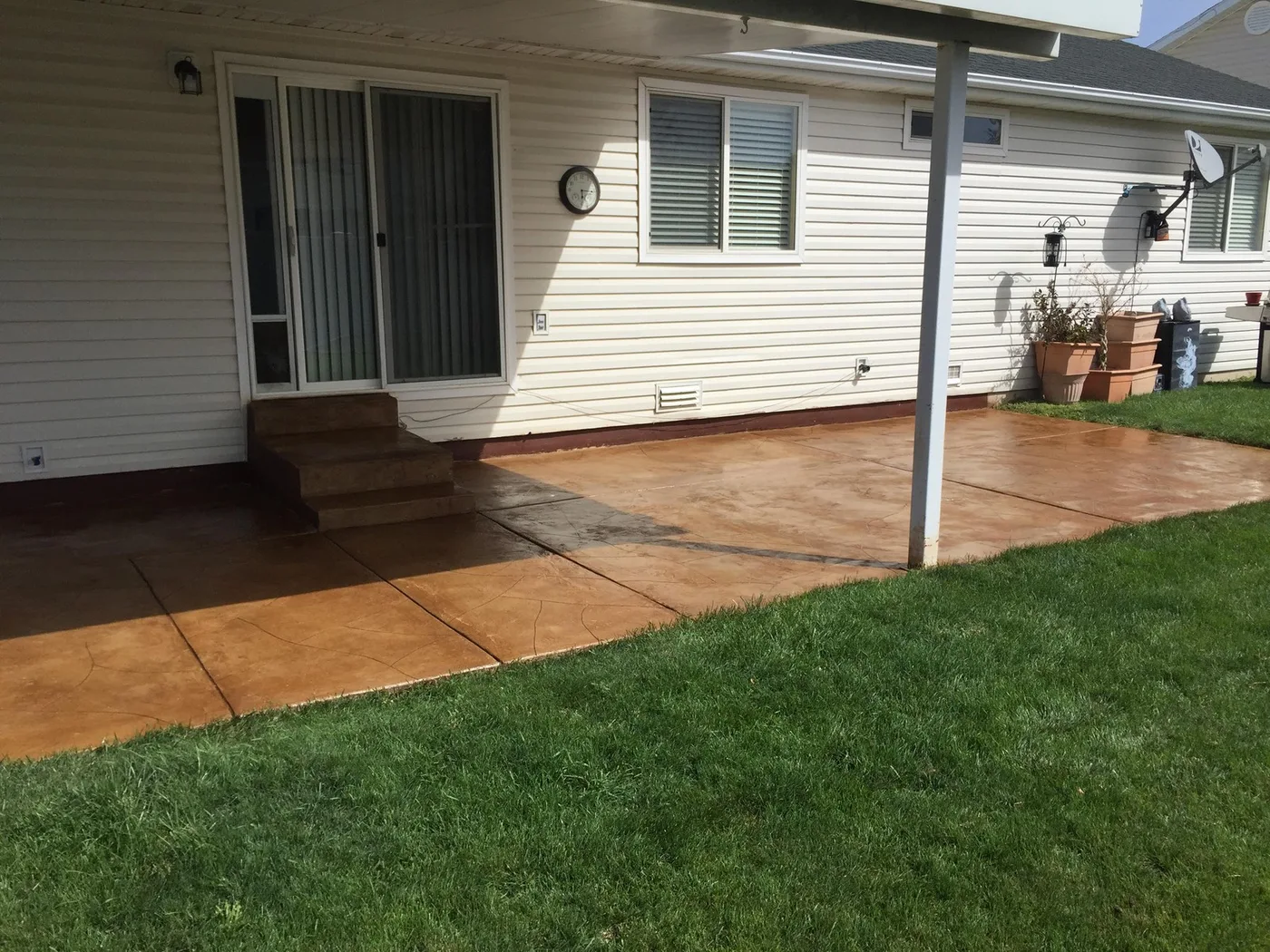
Acid stain or water-based stain: which fits your concrete?
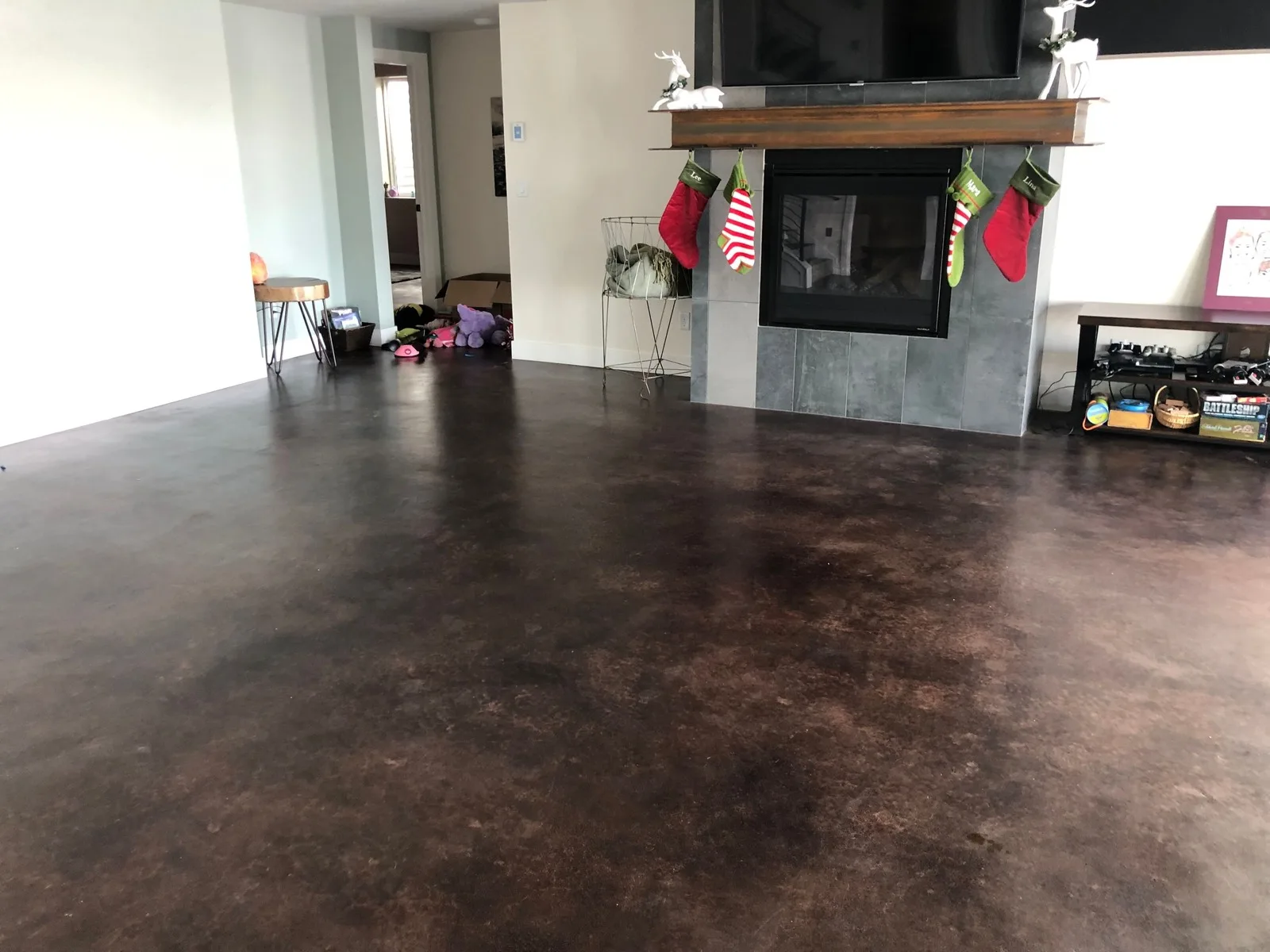
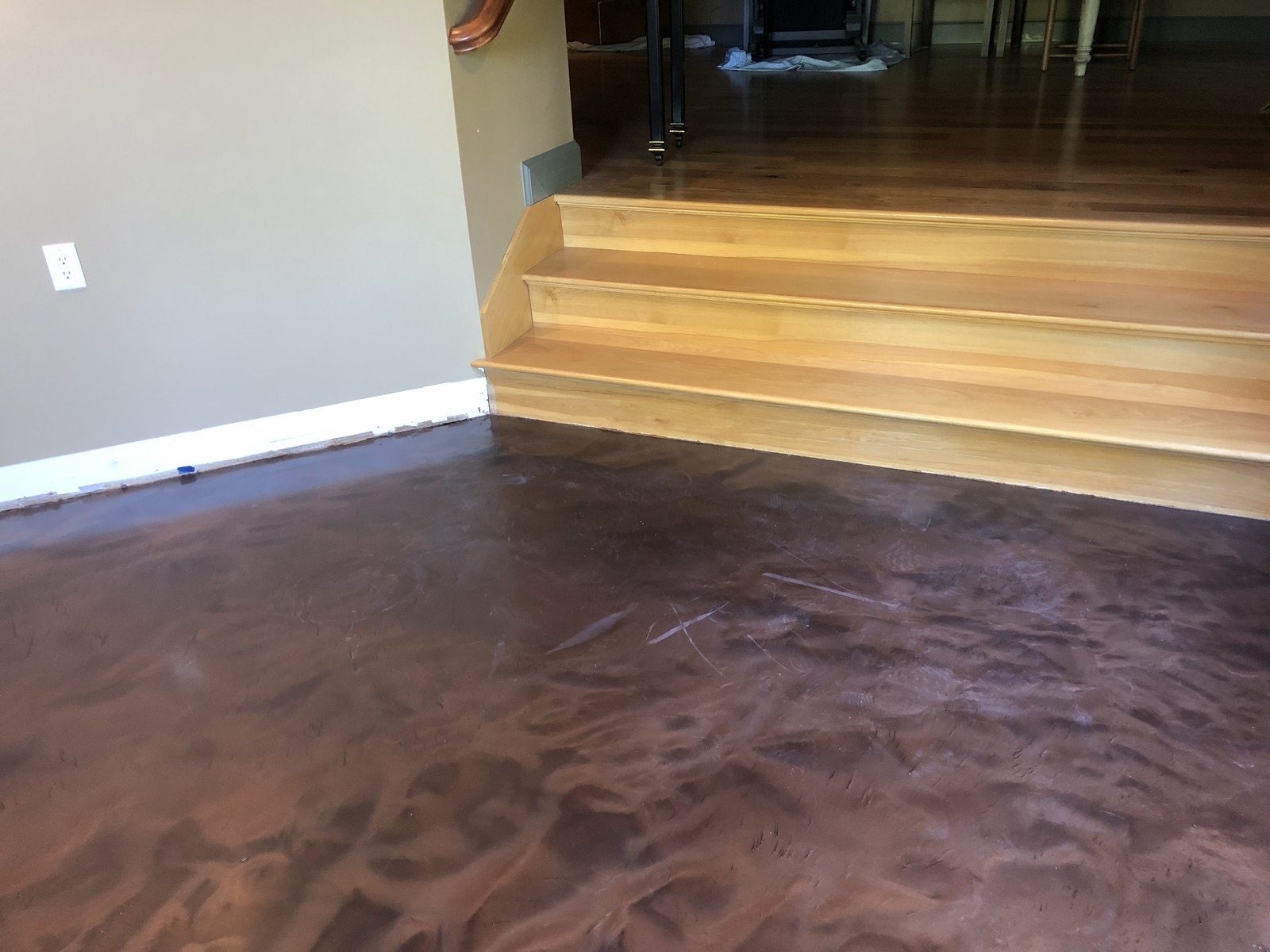
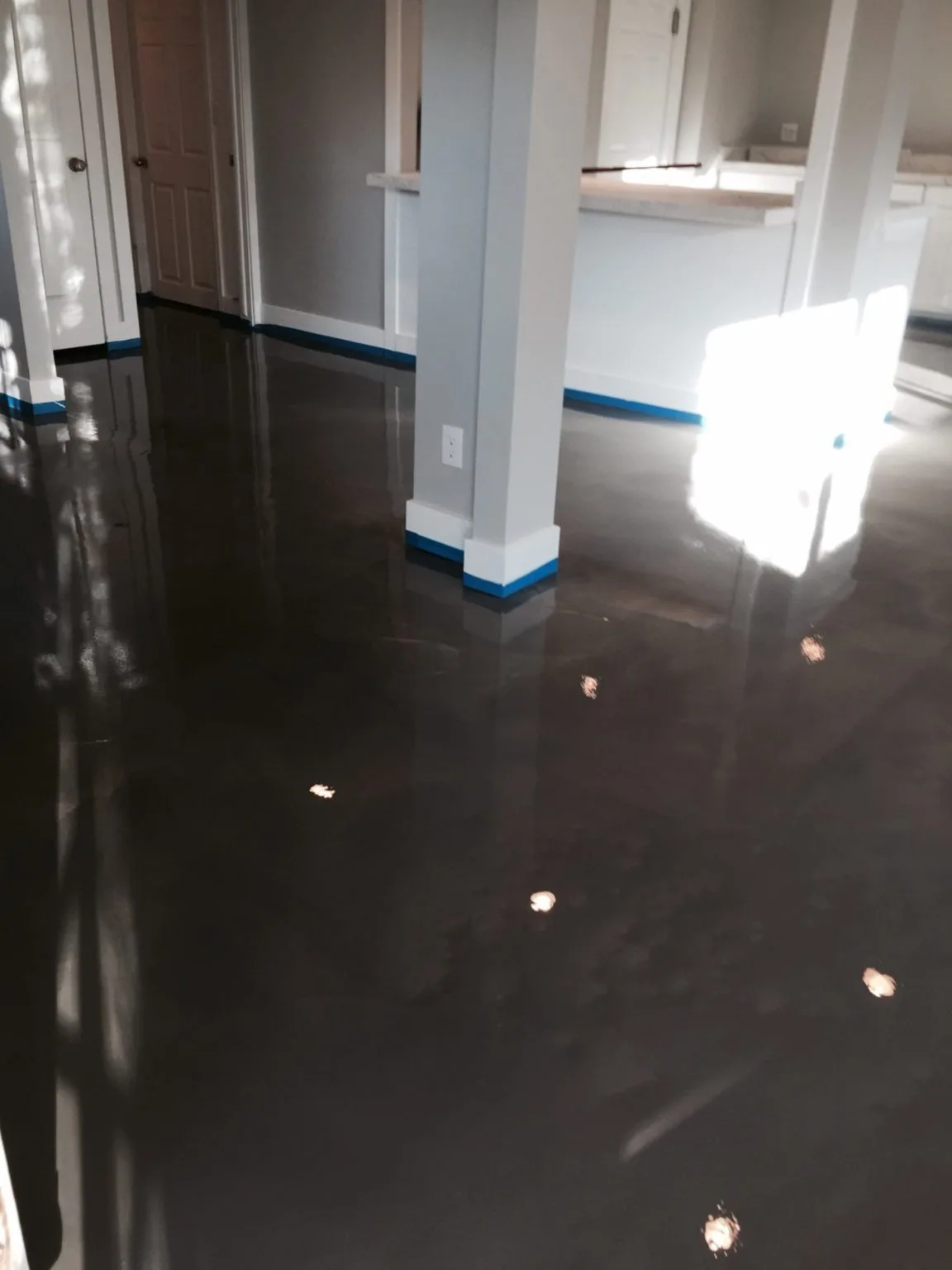
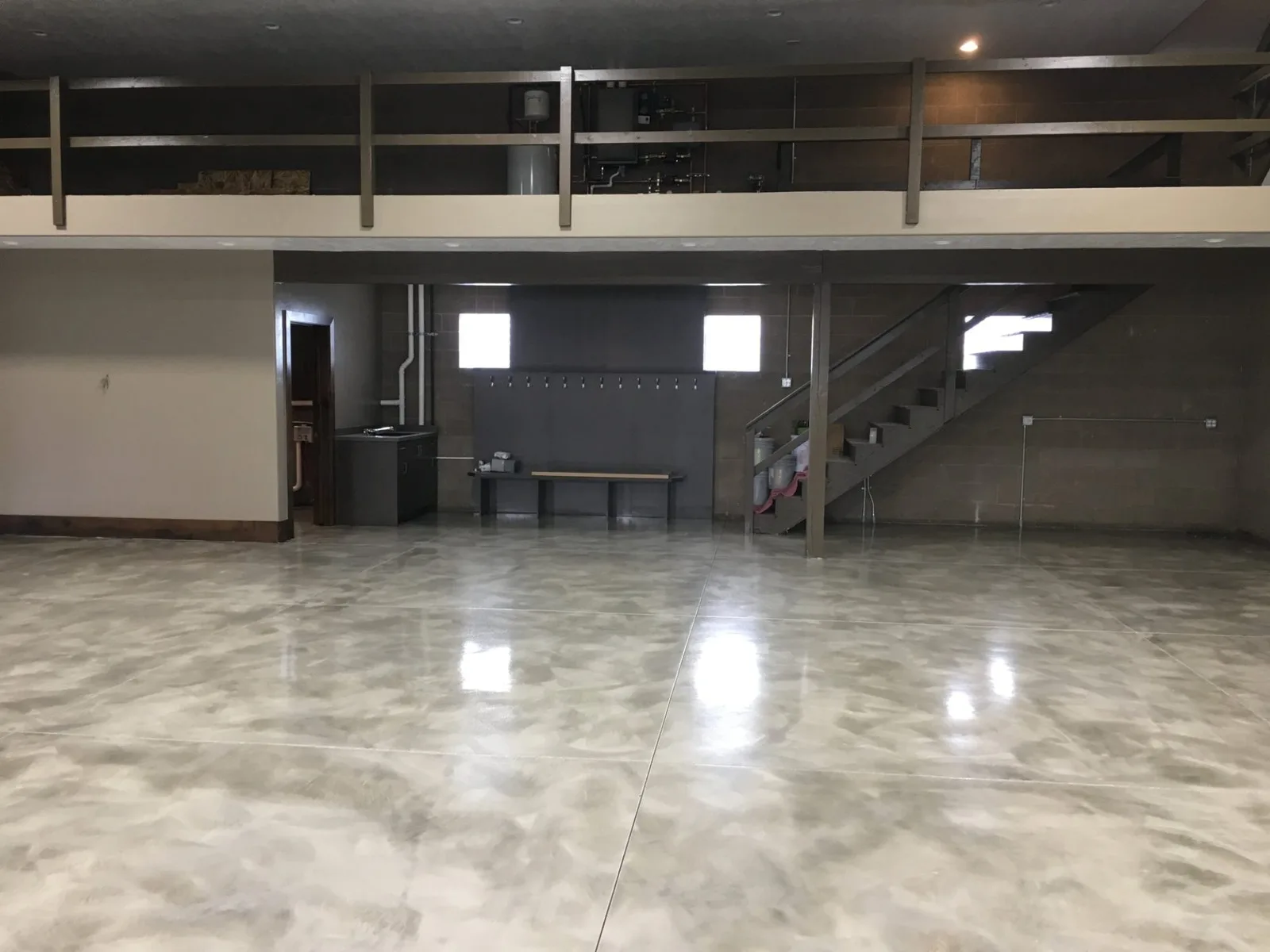
Acid stain is a reactive stain. It carries metallic salts that react with the lime in your concrete. The color forms inside the surface and stays part of the concrete. Acid stain gives you earth tones: browns, tans, soft greens, warm reds and black. The finish comes out mottled and cloudy, closer to stone or leather than paint. Water-based stain works differently. It carries fine pigment into the open pores of the slab. You get a much wider color range, including blues, grays and solid, even tones. Water-based stain also holds a more even color on newer concrete.
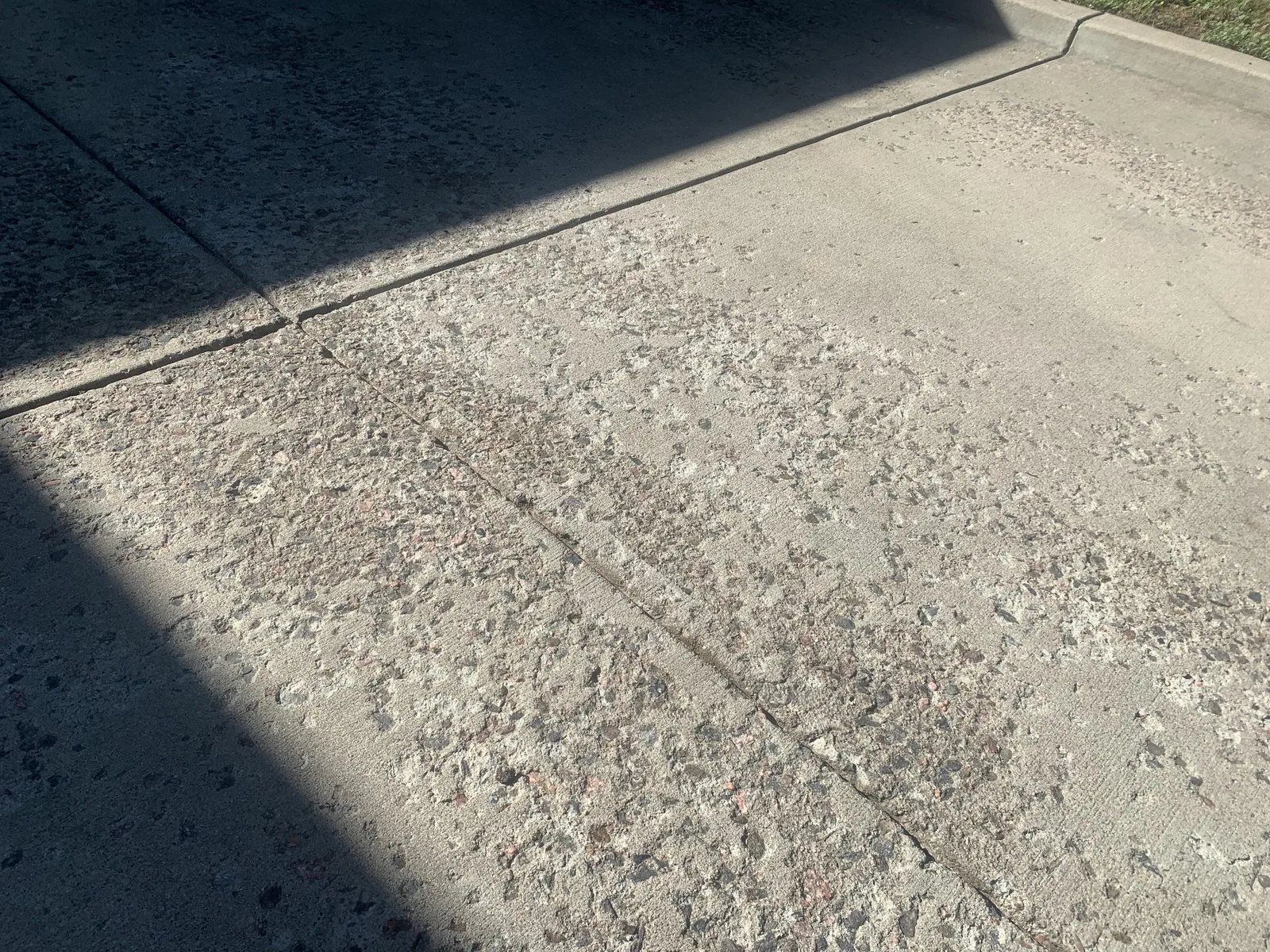
The same stain color lands differently on every slab. Age matters, because older concrete has less free lime for an acid stain to grab. The finish matters too. A hard-troweled interior floor drinks less stain than a broom-finished patio. Minerals in the mix, old patches and past cleaners all shift the final tone. Sun exposure and moisture in the slab change it again. This is why we put down a test area on your own concrete first. If you want a set pattern rather than a natural look, stencils, borders and flake finishes give you that control.
Stain or coat? Stain shows the slab, epoxy covers it
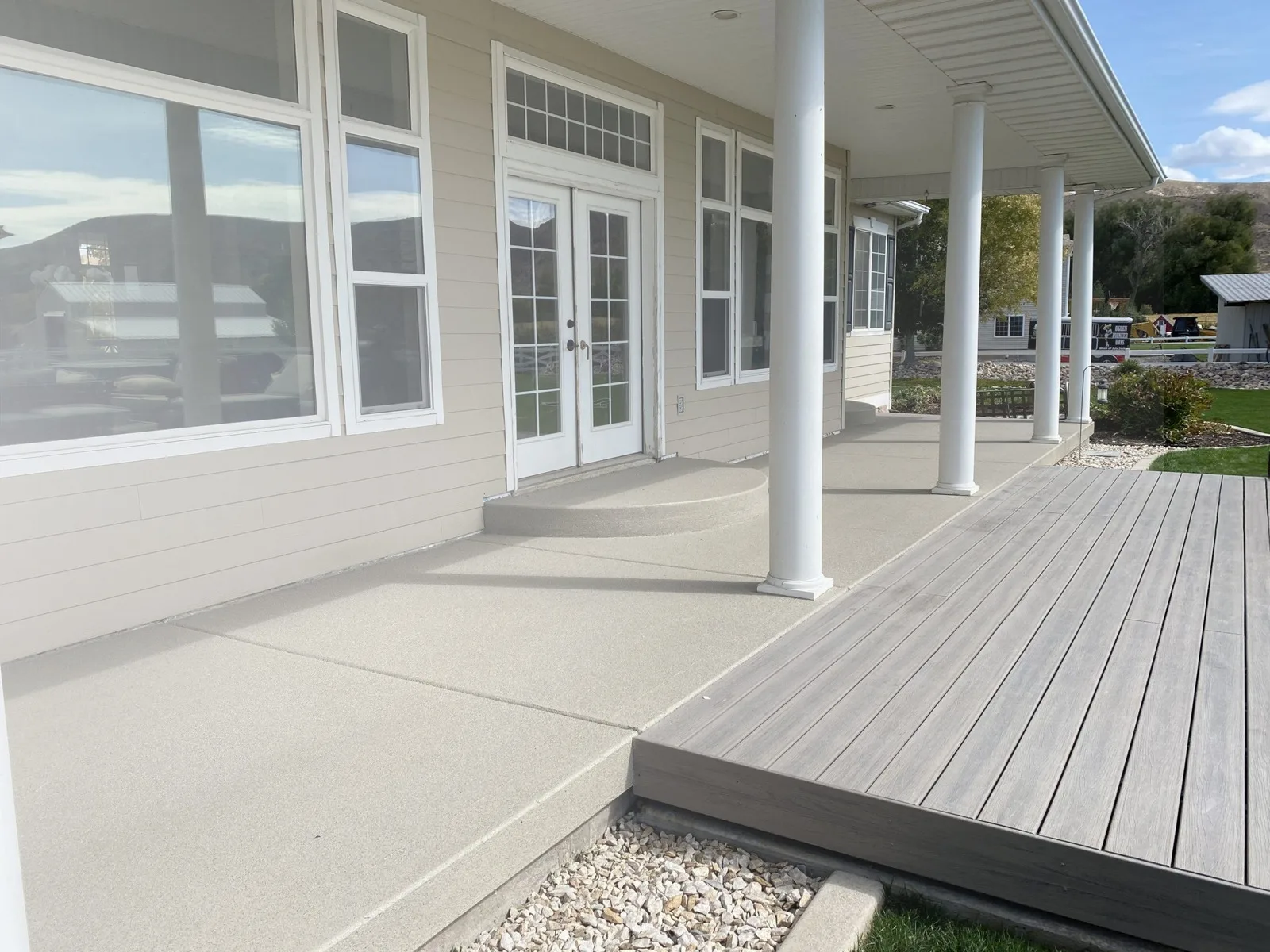
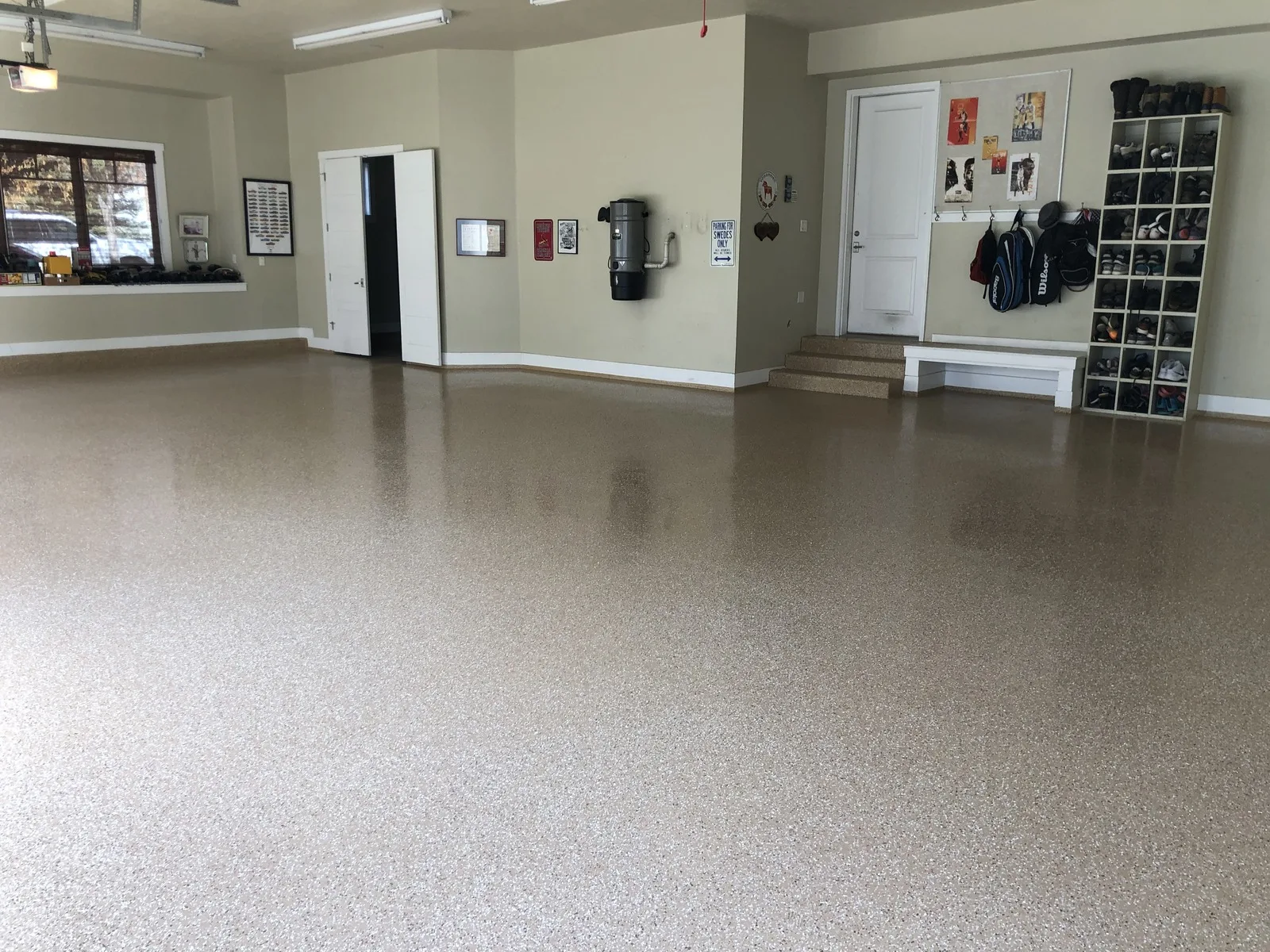
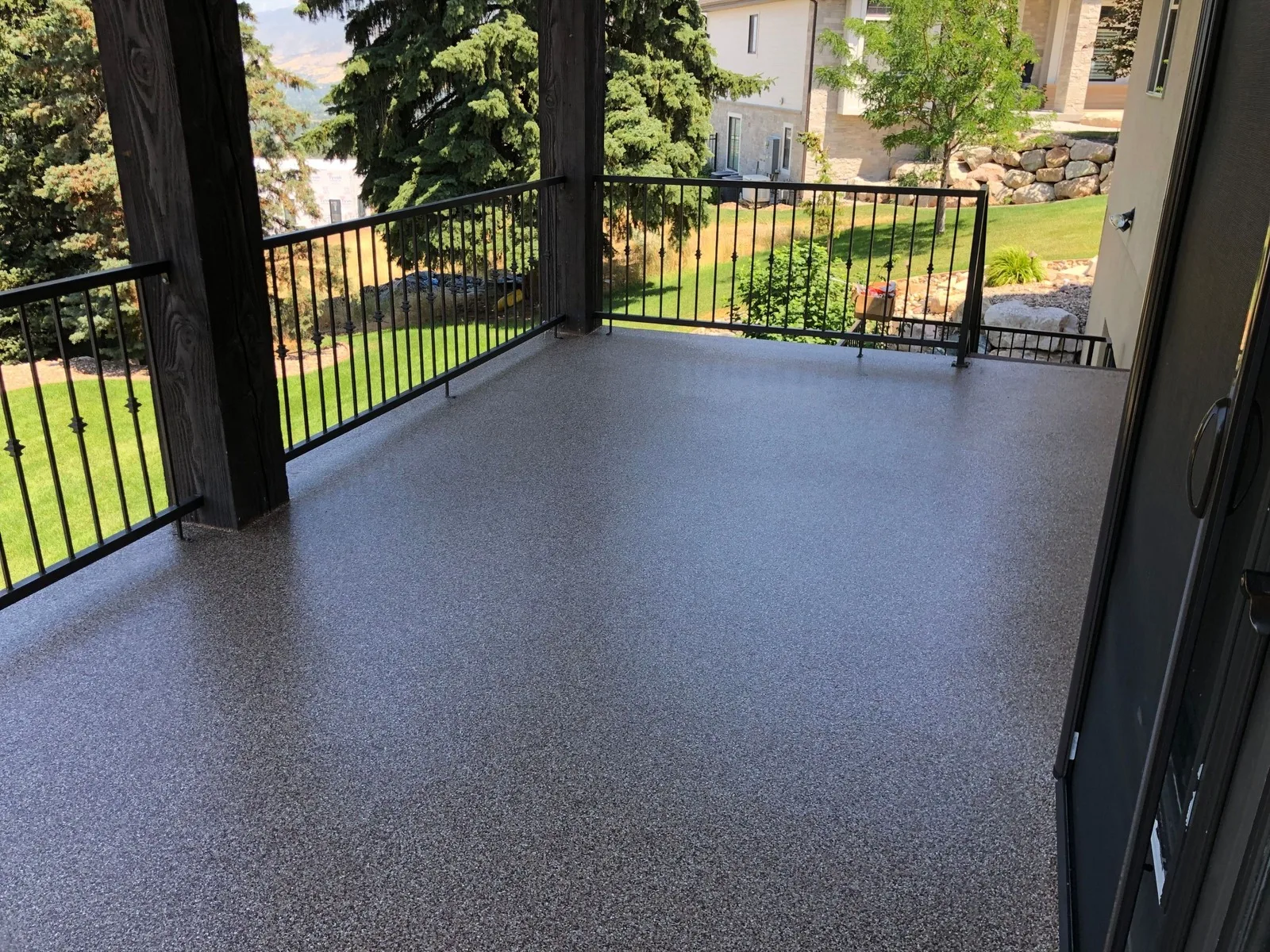
Stain and epoxy solve different problems. Stain colors the concrete you already have and leaves the texture showing. A coating builds a new surface on top and hides what sits under it. Pick stain when the slab is sound and you want to change how it looks. Pick a coating when you need chemical resistance, hot-tire resistance or a floor that hides old damage. Interior living floors, patios, porches and walkways are where stain does its best work. Garage floors and warehouse floors usually get a coating instead. Stain also keeps the slab looking like concrete, which is the point for a lot of people. We look at the slab and say which one it can carry.
Prep decides how the stain turns out. We clean the slab, strip any old sealer and open the surface so color can soak in. Cracks and spalling get repaired first, because stain follows every flaw in the slab. We stain when the surface is dry and the air sits between 50 and 90 degrees F. A damp slab or a cold morning leaves blotches and weak color. Indoors, a sealed stain holds its look for years with normal cleaning. Outdoors, UV from the Utah sun fades color over time, and snowmelt and road salt wear on the finish. That is why the stain always gets a clear sealer over the top, with a refresh on a schedule.
What does concrete staining cost in Utah?
Price on a staining job comes down to the slab in front of us. Square footage sets the base. Condition sets the rest. A slab with old sealer, glue, paint or curing compound takes more grinding before any color goes down. Cracks, spalling and pitting add repair time. Acid stain and water-based stain are priced differently, and so is a second color or a pattern. The sealer you pick matters too, since some hold up longer under sun and traffic than others. Indoor floors that need furniture moved and rooms masked off take longer than an open patio.
We give free estimates, and we come out and look at the concrete first. Bring us a basement floor, a front porch, a back patio or a long walkway. We work the Wasatch Front from our shop in Centerville. That covers Bountiful, Farmington, Kaysville and Layton in Davis County, plus Sandy to the south. It also covers concrete staining in Salt Lake City. Call (801) 347-4518 and the office will get you on the schedule. He answers Monday through Friday, 8am to 5pm.