Decorative concrete finishes and how to choose one
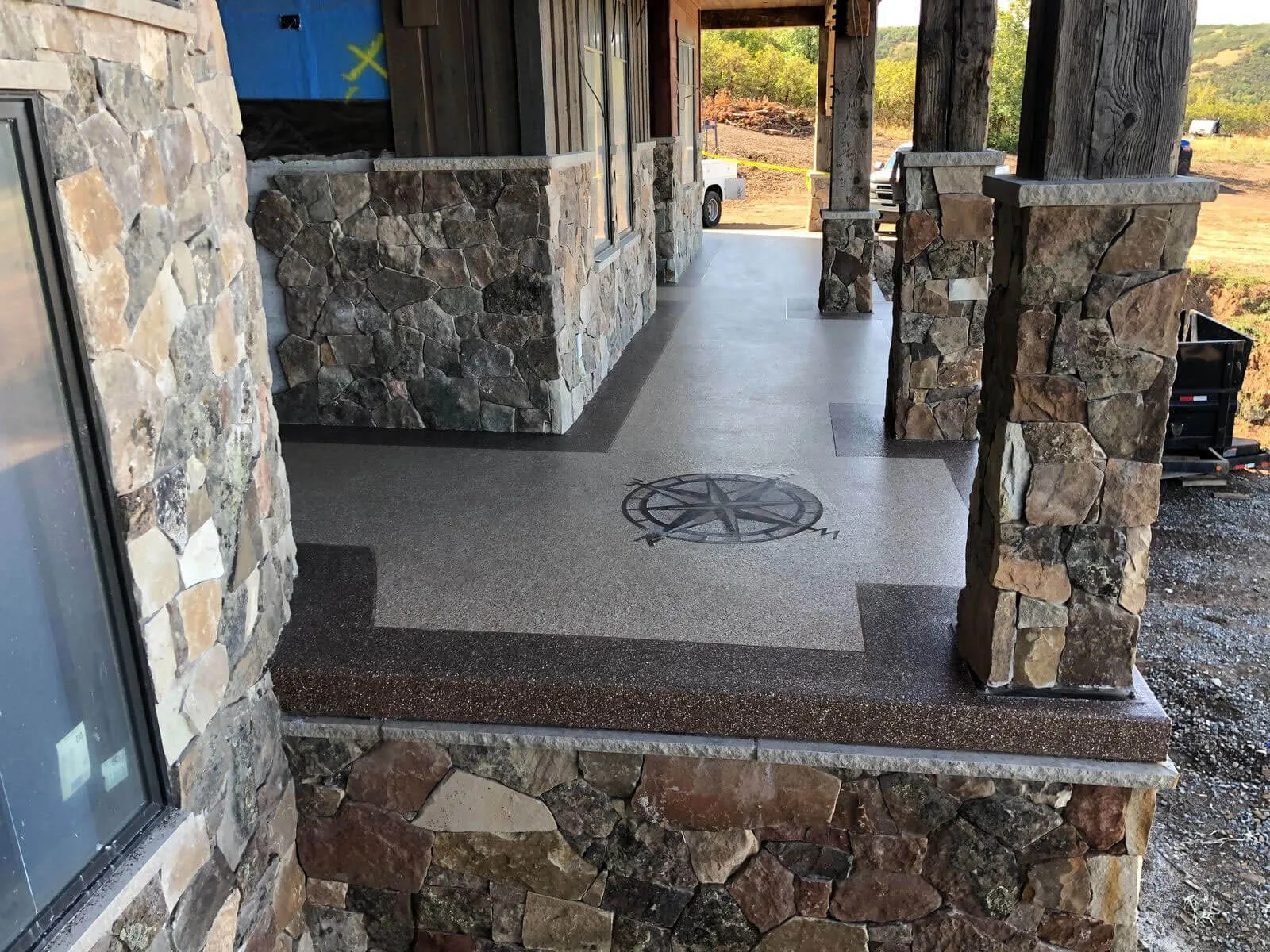
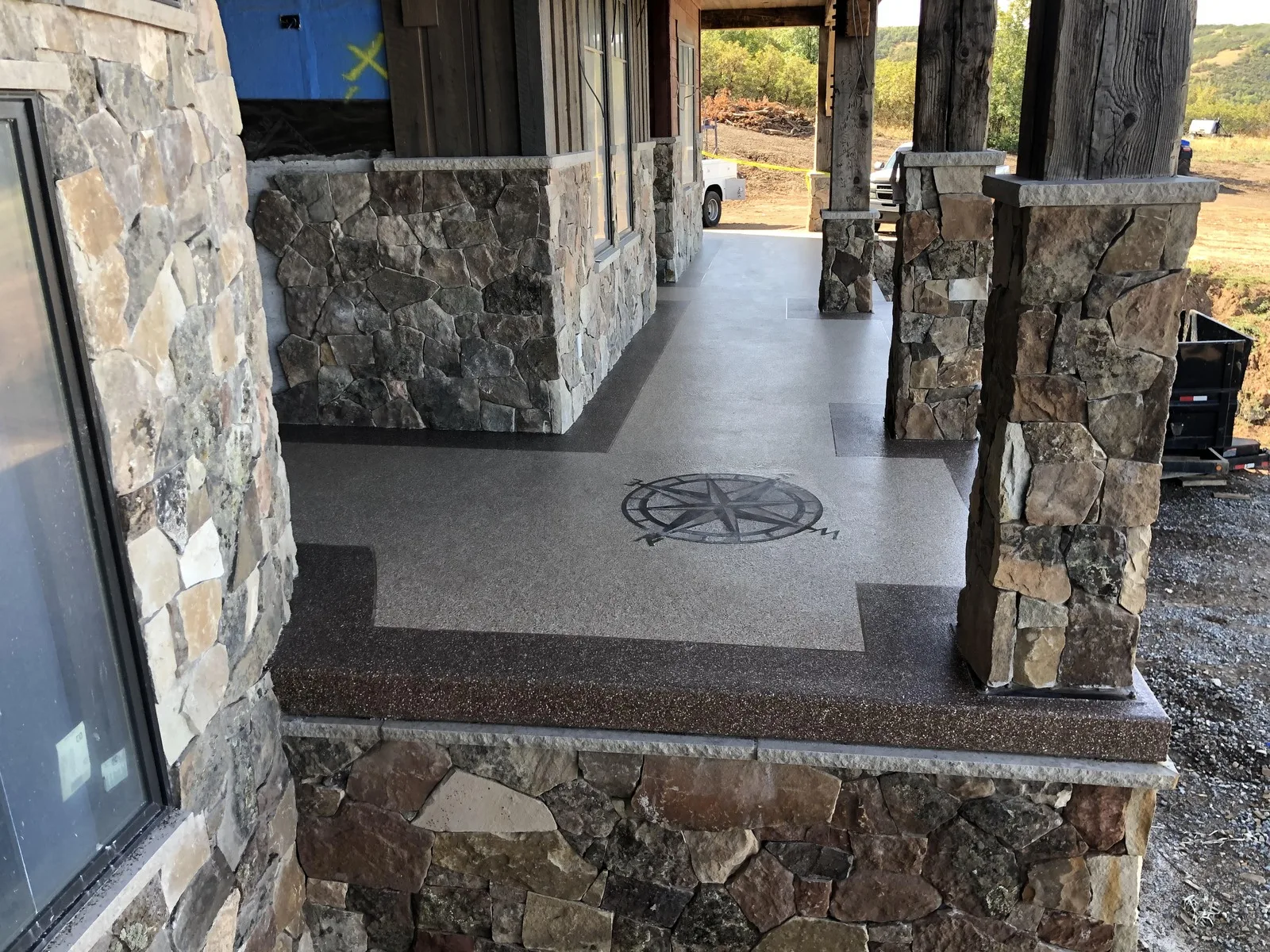
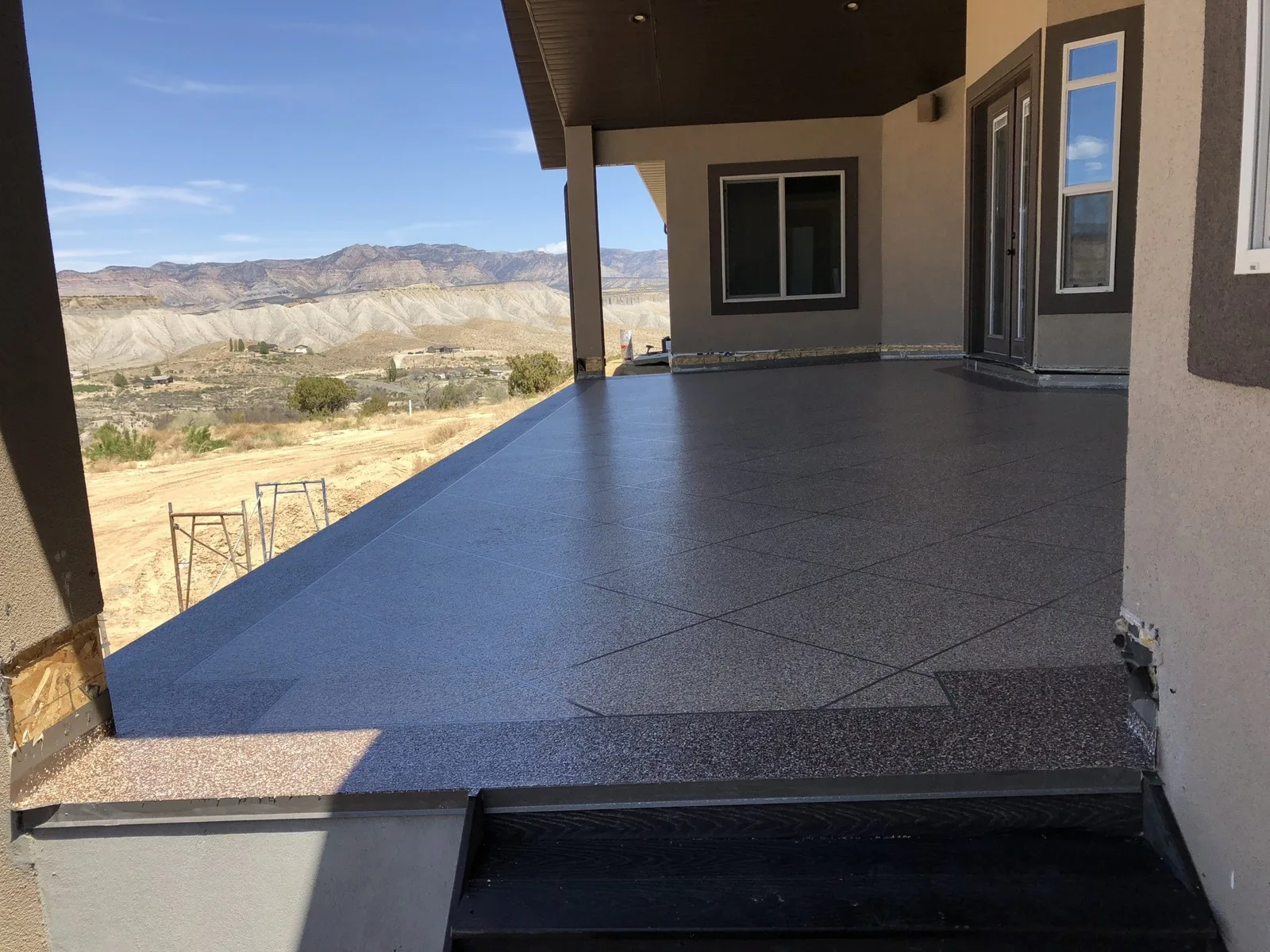
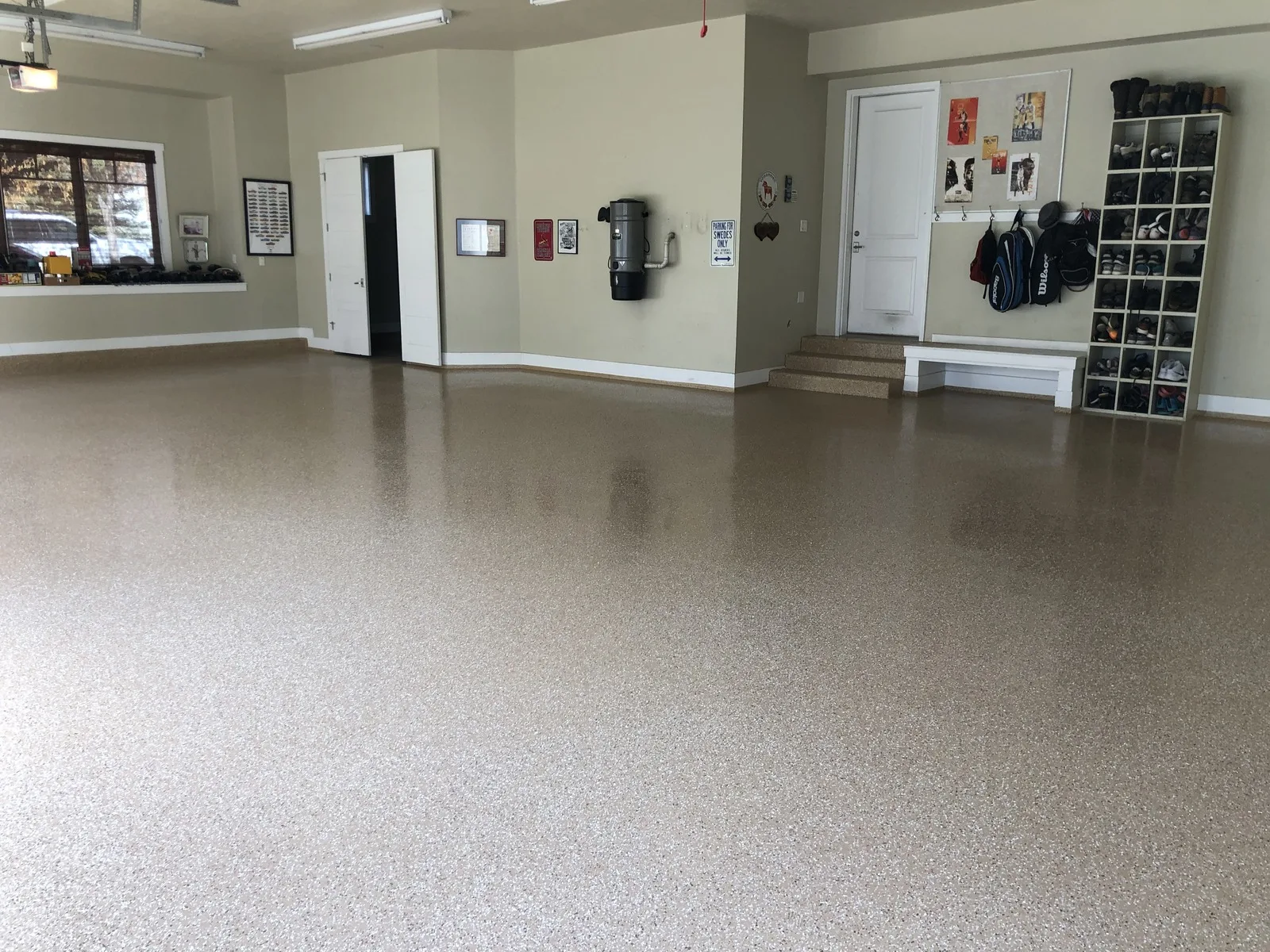
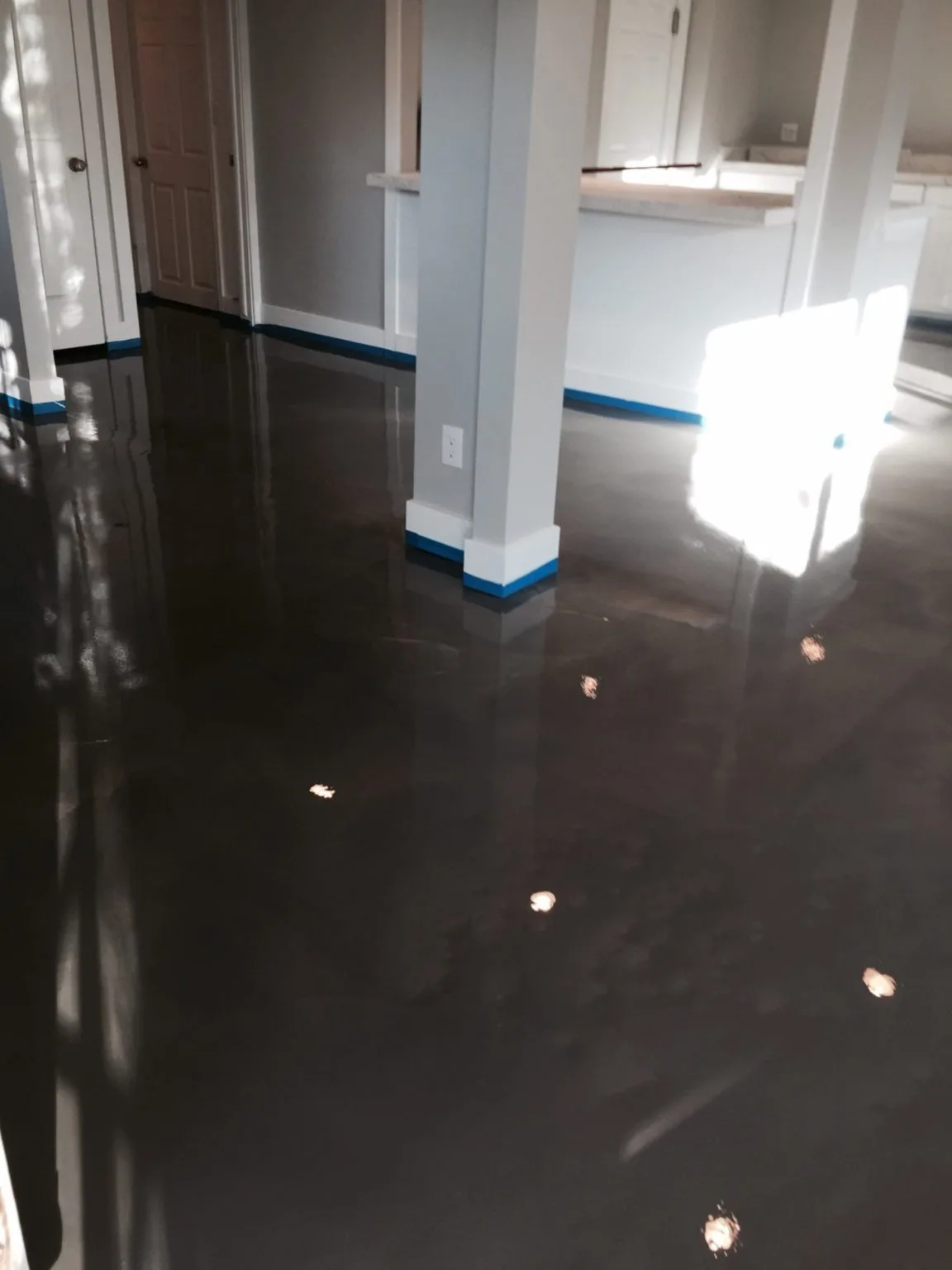
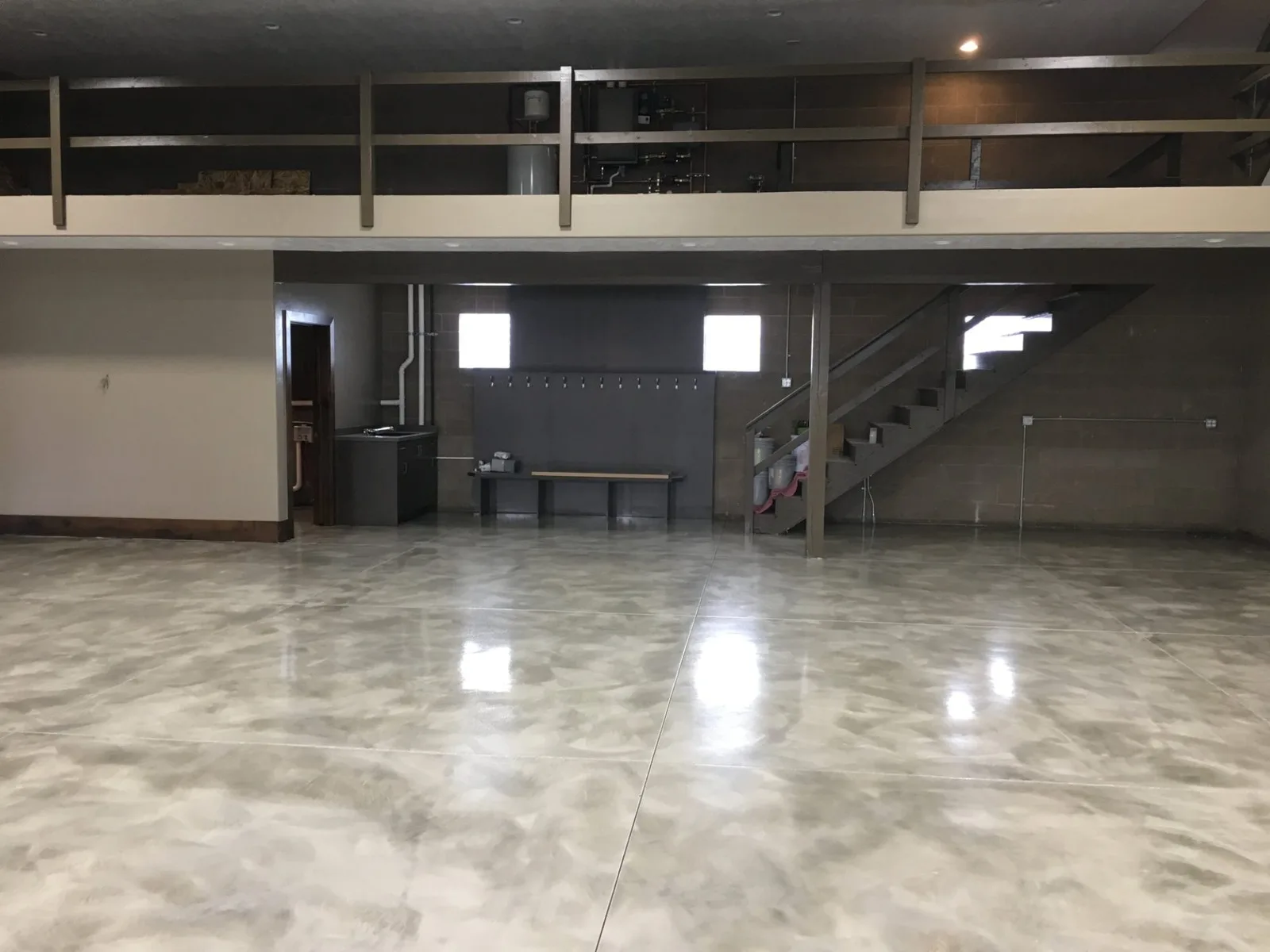
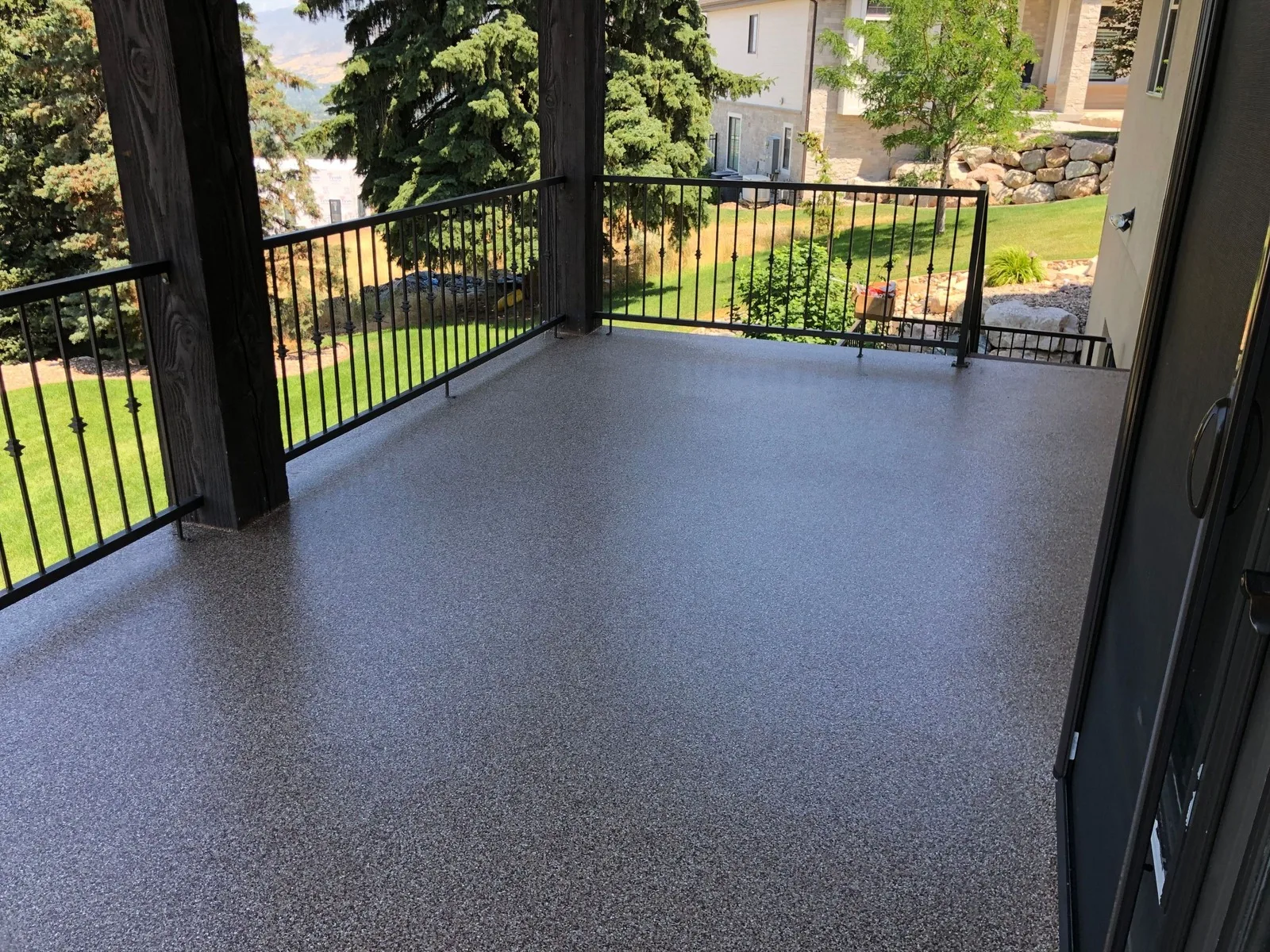
Every job starts with color. Light tans and grays stay cooler underfoot than dark browns and charcoals. That matters on a west facing patio in July. Then pick the decorative layer. A flake floor coating drops colored chips into a wet base coat, and the chips hide dirt and small flaws. A stencil cuts a brick or stone pattern into the color. A knockdown texture leaves a soft bumpy surface with grip. A stamped concrete overlay presses a pattern into a thin cement layer. An old slab then reads like new stamped concrete. For a poured marble look instead, see metallic epoxy floors.
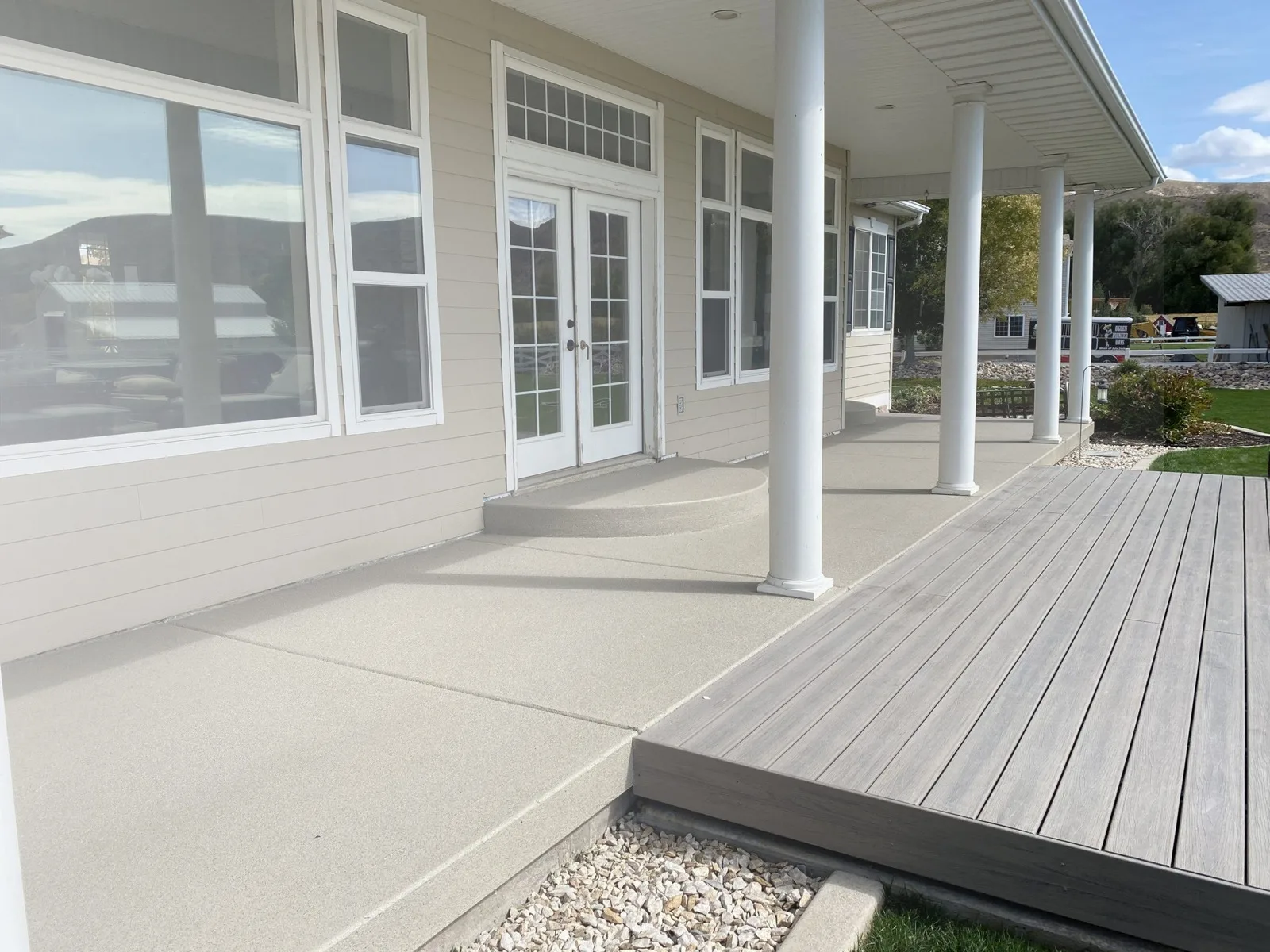
Texture is the other choice, and in Utah it is a safety choice. Snow melts on a patio and refreezes at night. A slick finish then becomes a hazard. Water tracks off swimming suits onto a pool surround all summer. Where the surface gets wet, we build texture in with a knockdown or splatter finish. The build is the same on every job. We repair the cracks and spalled spots, then put down a base coat. The decorative layer goes on next, and a clear top coat seals it. Outdoors we use a UV stable top coat that holds its color in the Utah sun.
Sport court coatings for basketball and pickleball
A sport court coating is the same decorative system laid out for play. We prep the slab, fix the cracks, then build color and texture across the whole pad. Lines get painted in a contrasting color and sealed under the top coat, so they stay put under play. Backyard courts are usually set up for basketball or pickleball, and one pad can carry both line sets. A darker playing area inside a lighter border reads clearly from across the yard. Grip counts on a court, because the surface gets wet and players stop hard. Ask about cushioned court systems if you want more give underfoot.
Utah weather drives the details on a court. Sun bakes the surface from June through September, so the top coat has to be UV stable. Snow and ice sit on the pad in winter. The coating has to move with the slab through the freeze and thaw. We grind or sandblast first, because a coating over a dirty or sealed slab peels. Cracks get filled before any color goes down. A court also needs a plan for water, so we look at slope and drainage before we quote. Tennis lines fit a full size pad, and a smaller pad usually works better with one sport.
What do decorative concrete coatings cost in Utah?
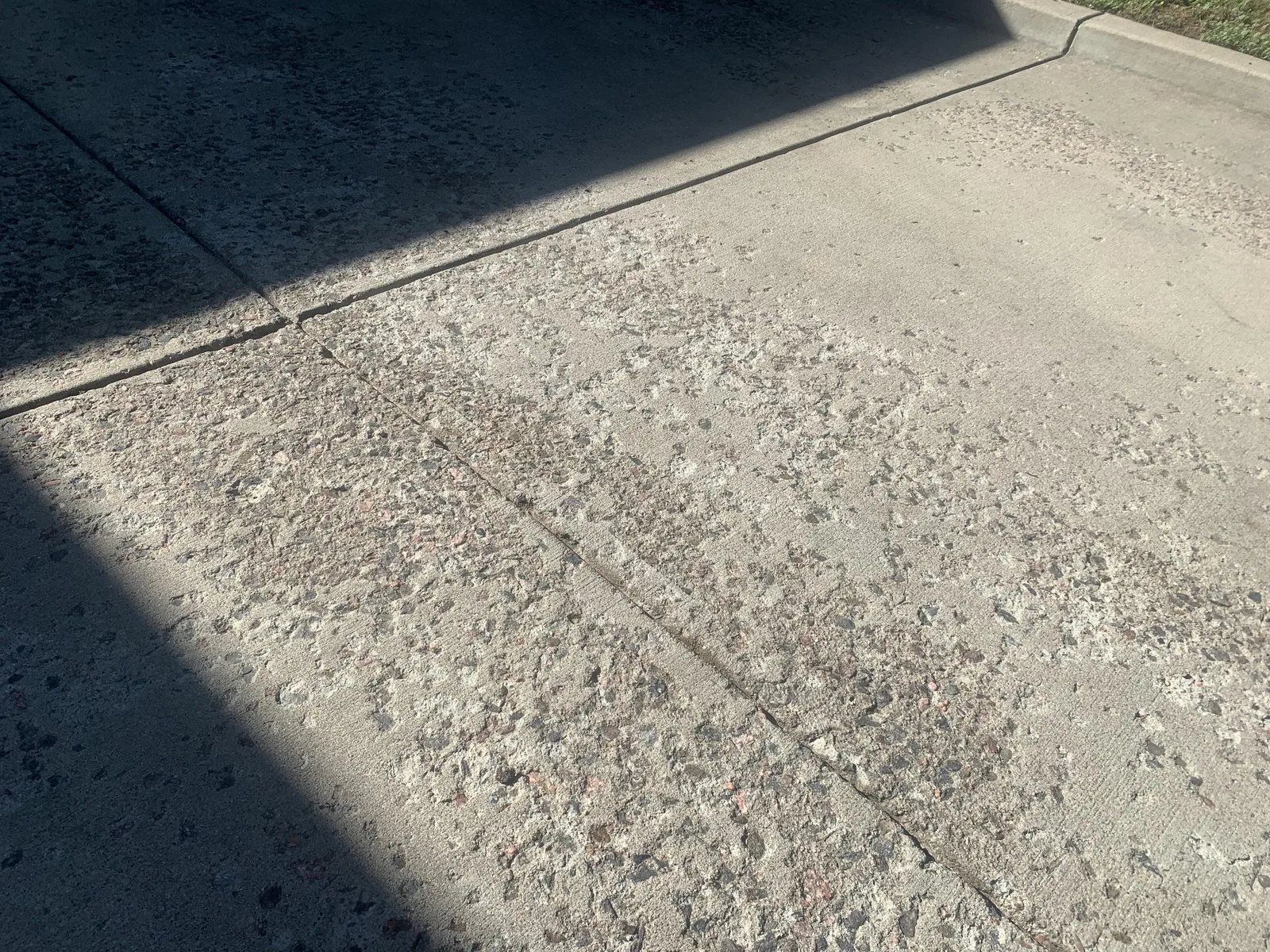
Cost tracks the shape the concrete is in and the finish you pick. A clean, flat slab needs less prep than one with cracks, spalling, pitting and pop outs from road salt. Square footage sets the base, and odd shapes with lots of edge work add hand grinding. A single color with a clear top coat sits at the low end. Flake blends, stencils, borders and stamped overlays each add material and labor. Sport court lines and a second color add time. Access changes the price too. A backyard patio behind a narrow gate is slower to prep than an open driveway. Weather and cure time can affect scheduling.
The only way to price a decorative coating is to look at the slab. Estimates are free, and we come out and check the concrete before we quote. Tell us the size of the area and the color you have in mind. We coat patios and courts across the Wasatch Front, from Ogden south through Salt Lake County. That takes in Bountiful, Farmington, Kaysville, Layton and Sandy. Call (801) 347-4518 Monday through Friday, 8am to 5pm. We pass on the manufacturer's warranty and apply every product to the manufacturer's specifications.