Resurface or replace: how we decide
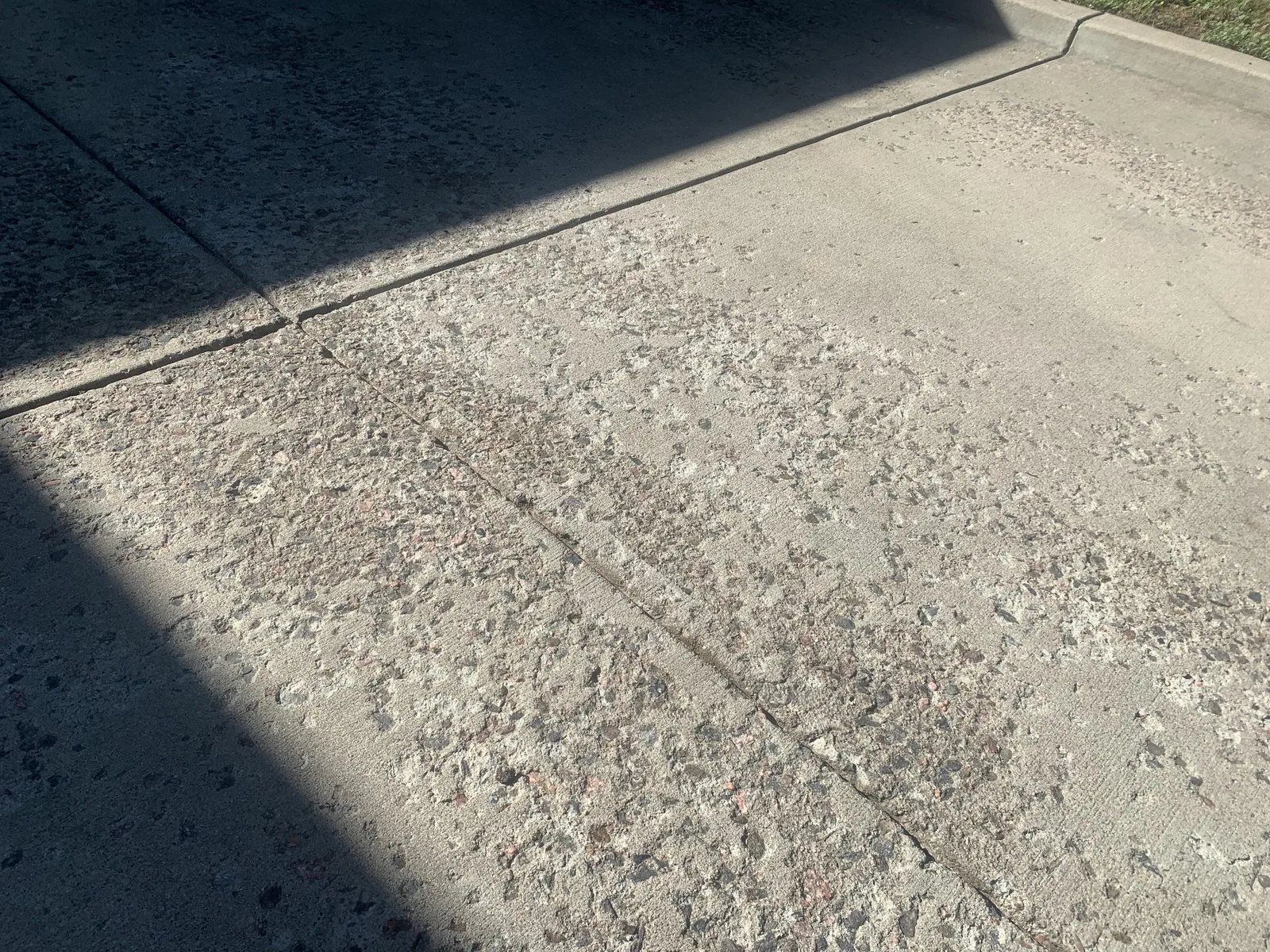
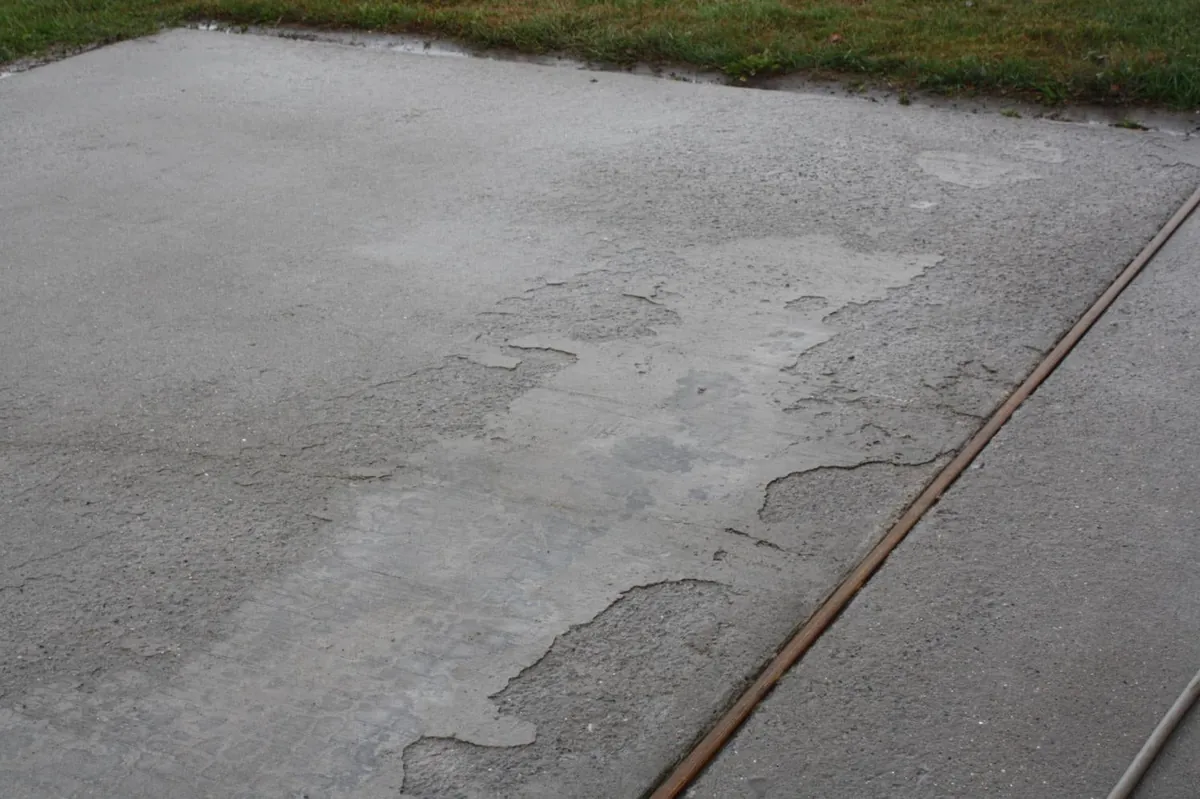
Resurfacing works when the slab underneath is still structurally sound. Surface problems are fair game: flaking, pitting, spalling from road salt, hairline cracks and worn stamped patterns. A 20 year old patio with a tired surface is a good candidate. So is a driveway that looks rough but still sits flat and solid. Pool decks resurface well too, and that work is covered on our pool deck coating page. We check for movement before anything else. If the slab is broken into pieces that rock underfoot, an overlay will only crack again. Heaving from tree roots or frost is a different problem, and so are deep structural cracks. Sections that have sunk out of plane need lifting or replacement first.
Tear out means breaking up the old slab, hauling it off, forming, pouring and then waiting on cure time. Resurfacing skips most of that work. That is the affordable alternative on repairs versus removal and replacement we have offered since 2005. You keep the slab you already paid for and spend the money on the surface you see. The job is faster too, and many porches and small patios are finished in a day. Justin Anderson left this review: "We used them 8 years ago to recover our driveway. It still looks great and cost is 1/4th what it would have if we replaced the whole thing."
How a concrete resurfacing job runs
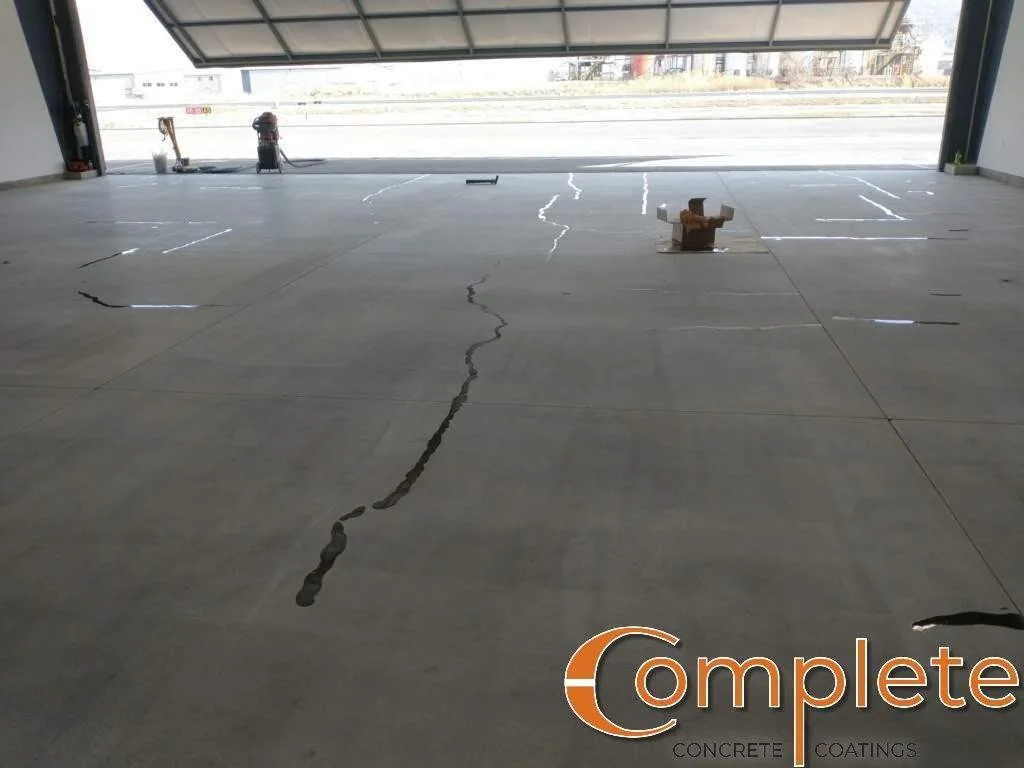
Every resurfacing job starts with prep, because the new surface can only be as good as its bond. We sandblast or diamond grind the slab to strip off old sealer, dirt and loose material. That opens the pores so the overlay can key into the concrete. Cracks get chased out and filled with a repair material that flexes with the slab. Spalled and pitted areas are filled flush, and broken edges are rebuilt. Steps and porch noses get rebuilt the same way. Then the slab is cleaned and checked for moisture before the first coat goes on.
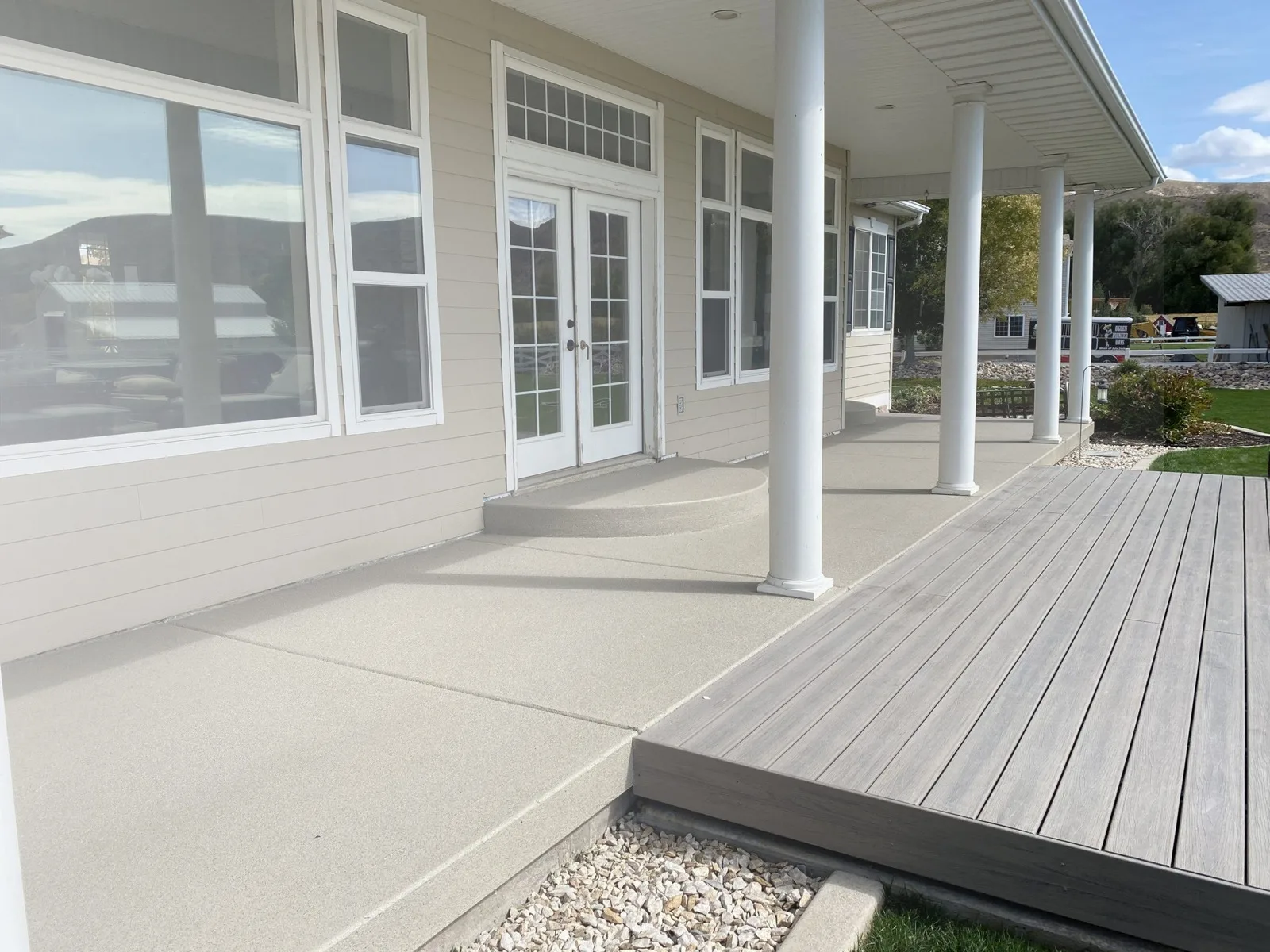
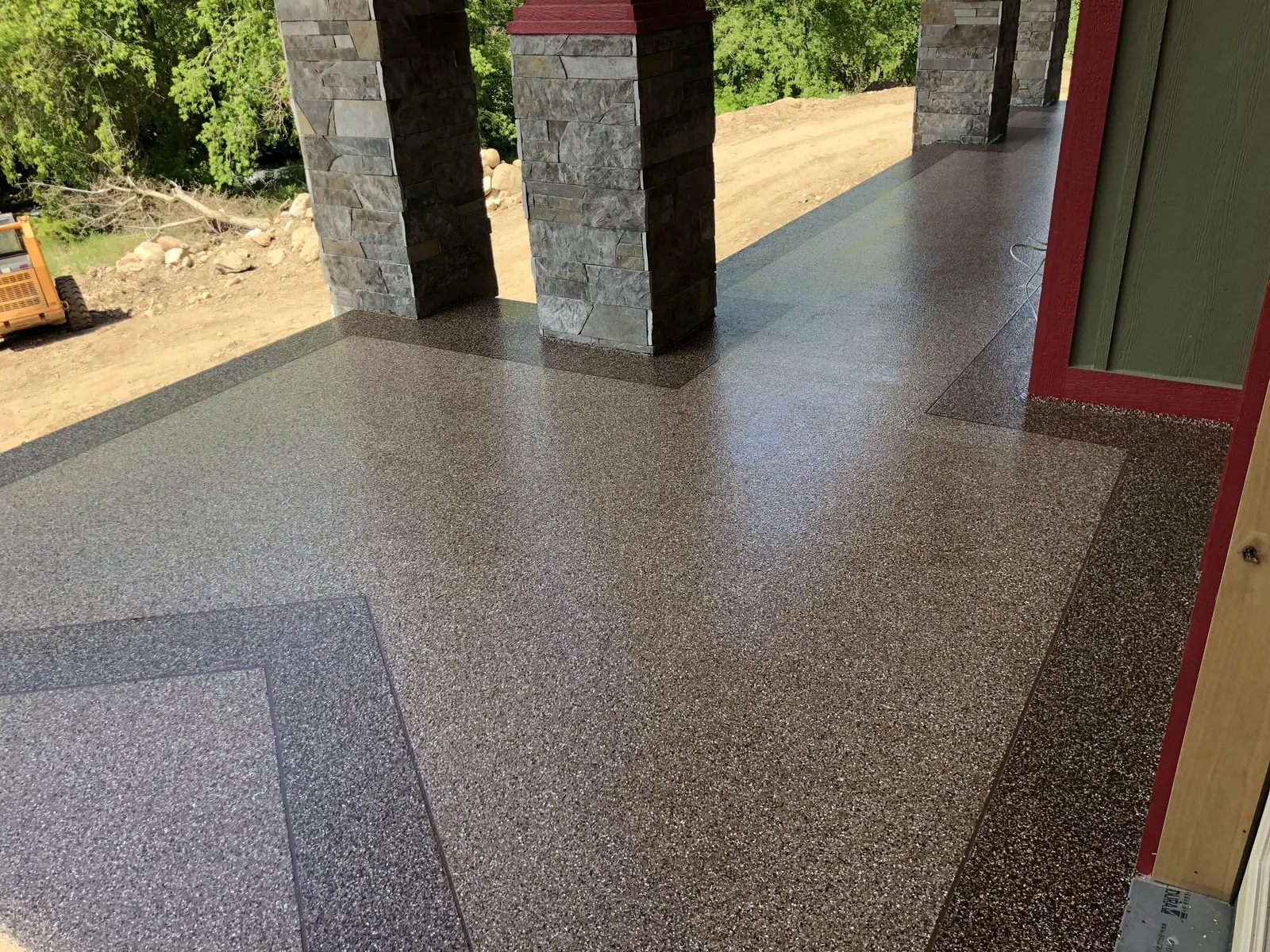
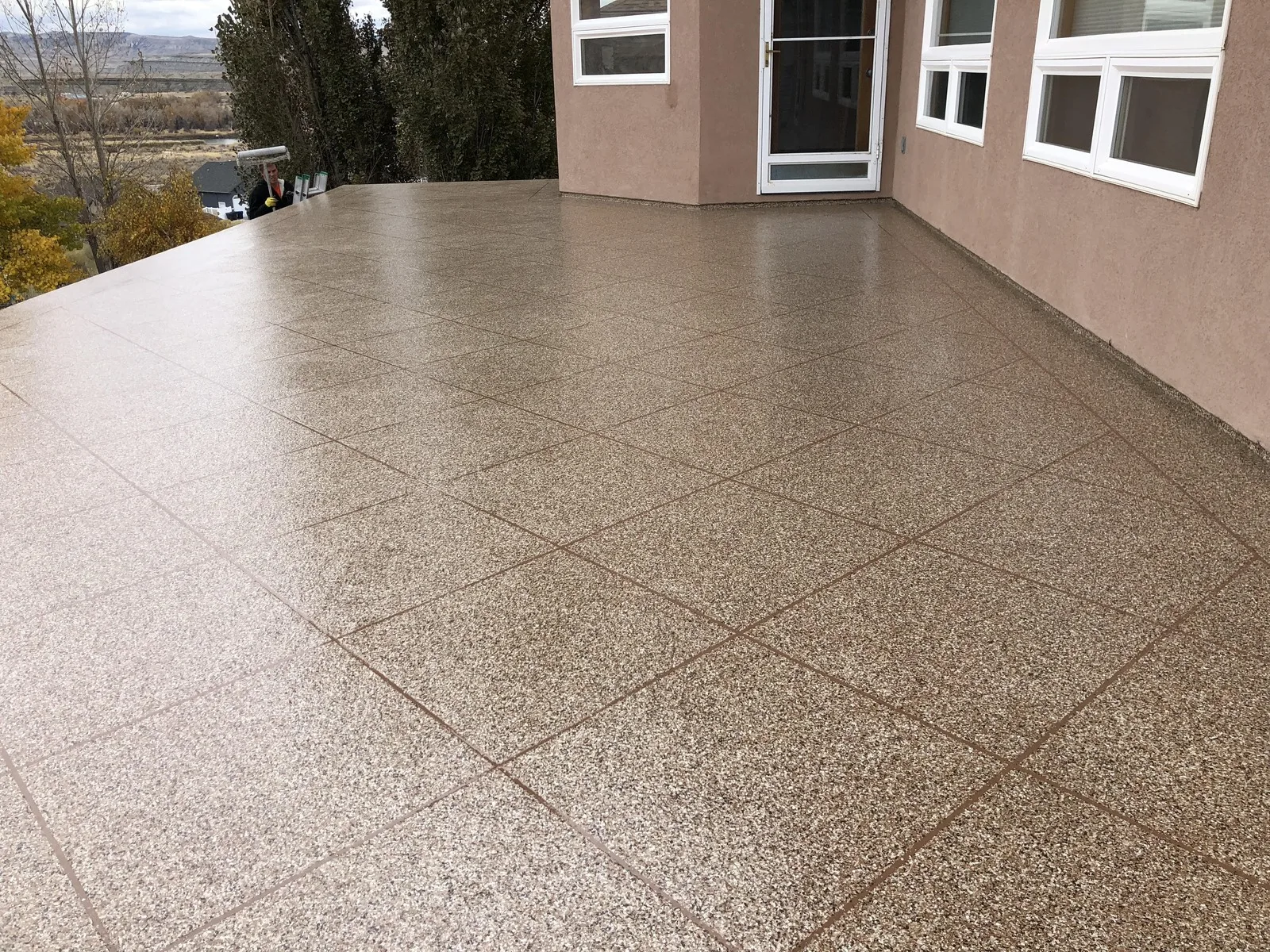
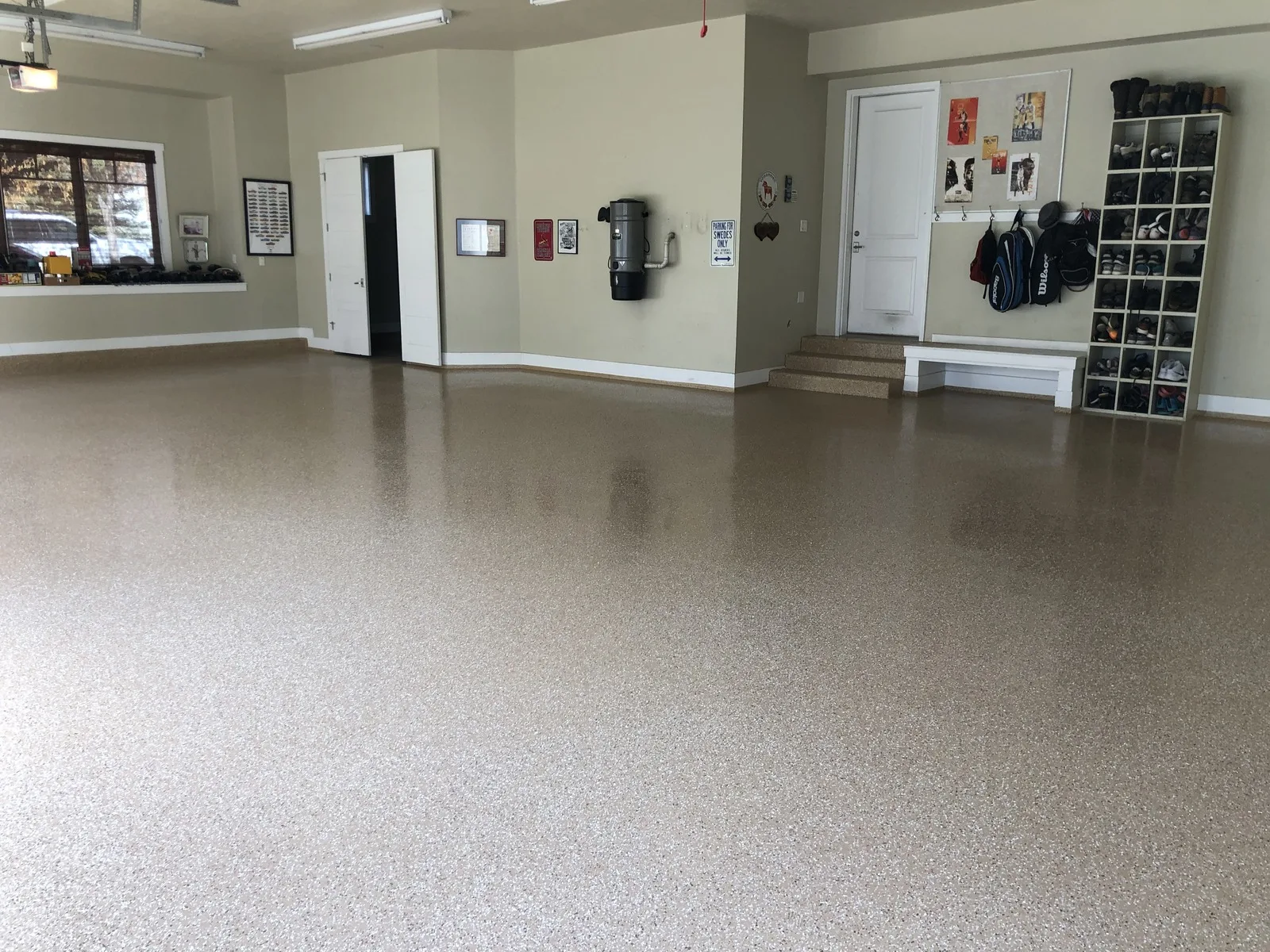
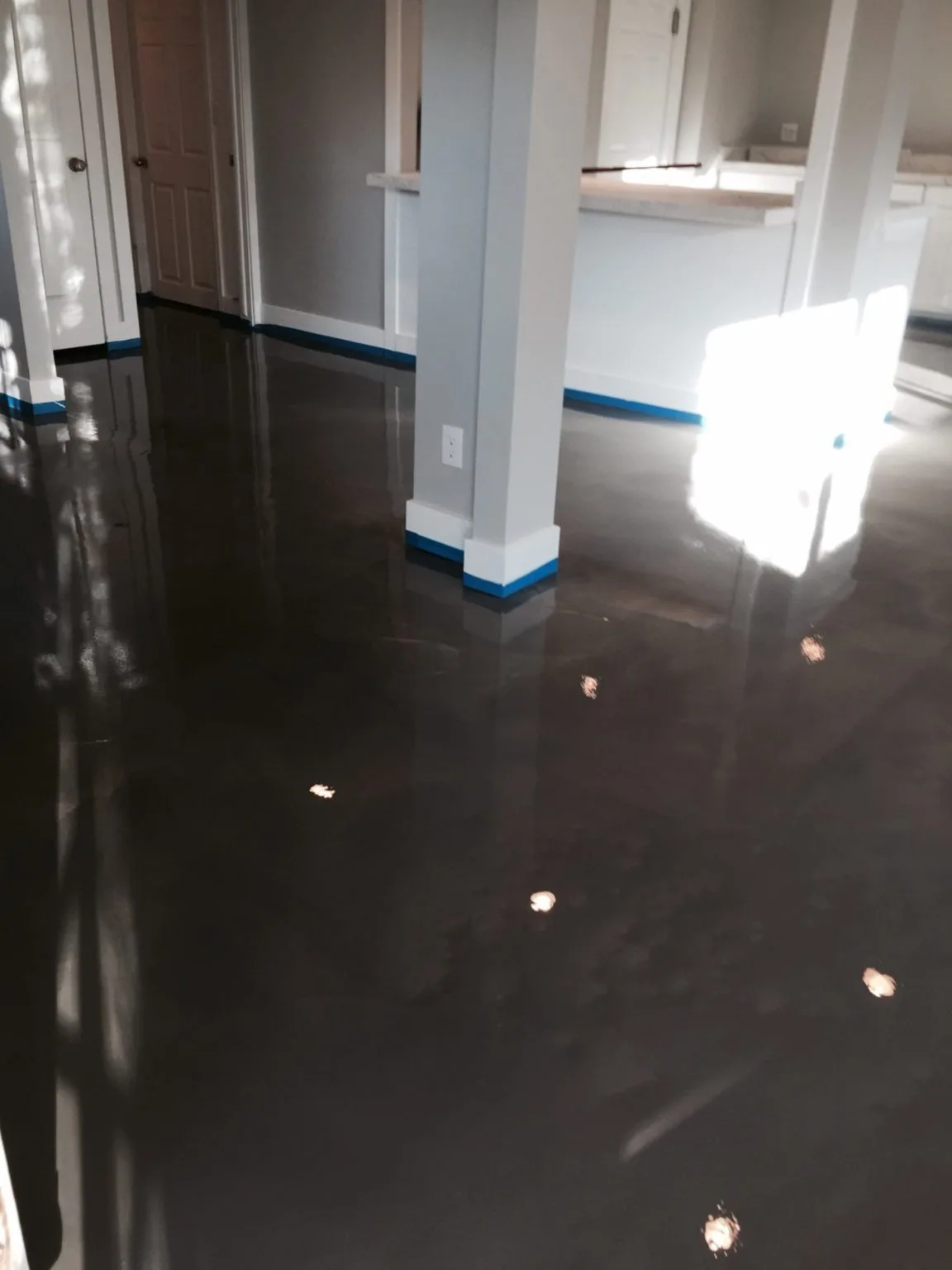
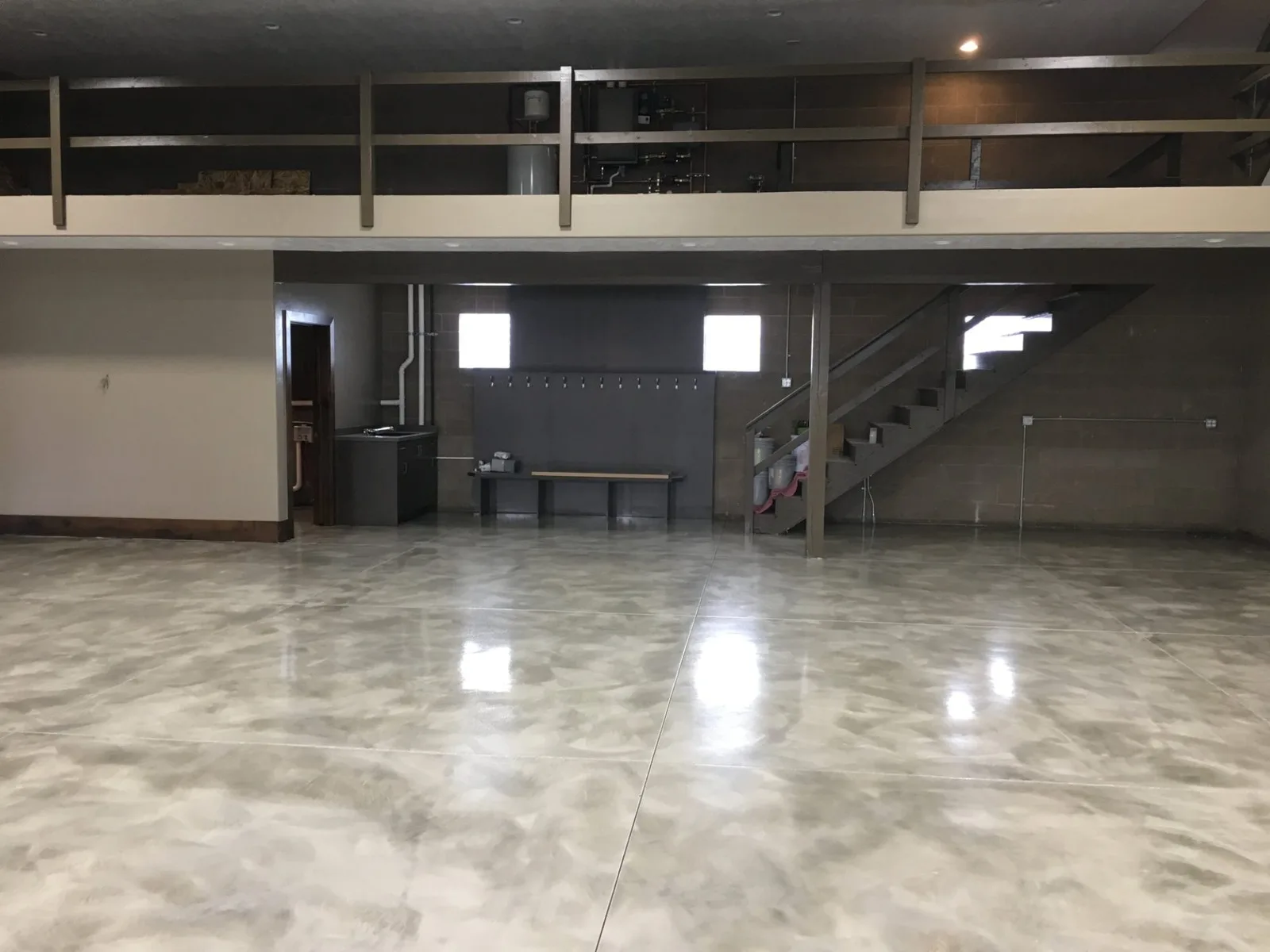
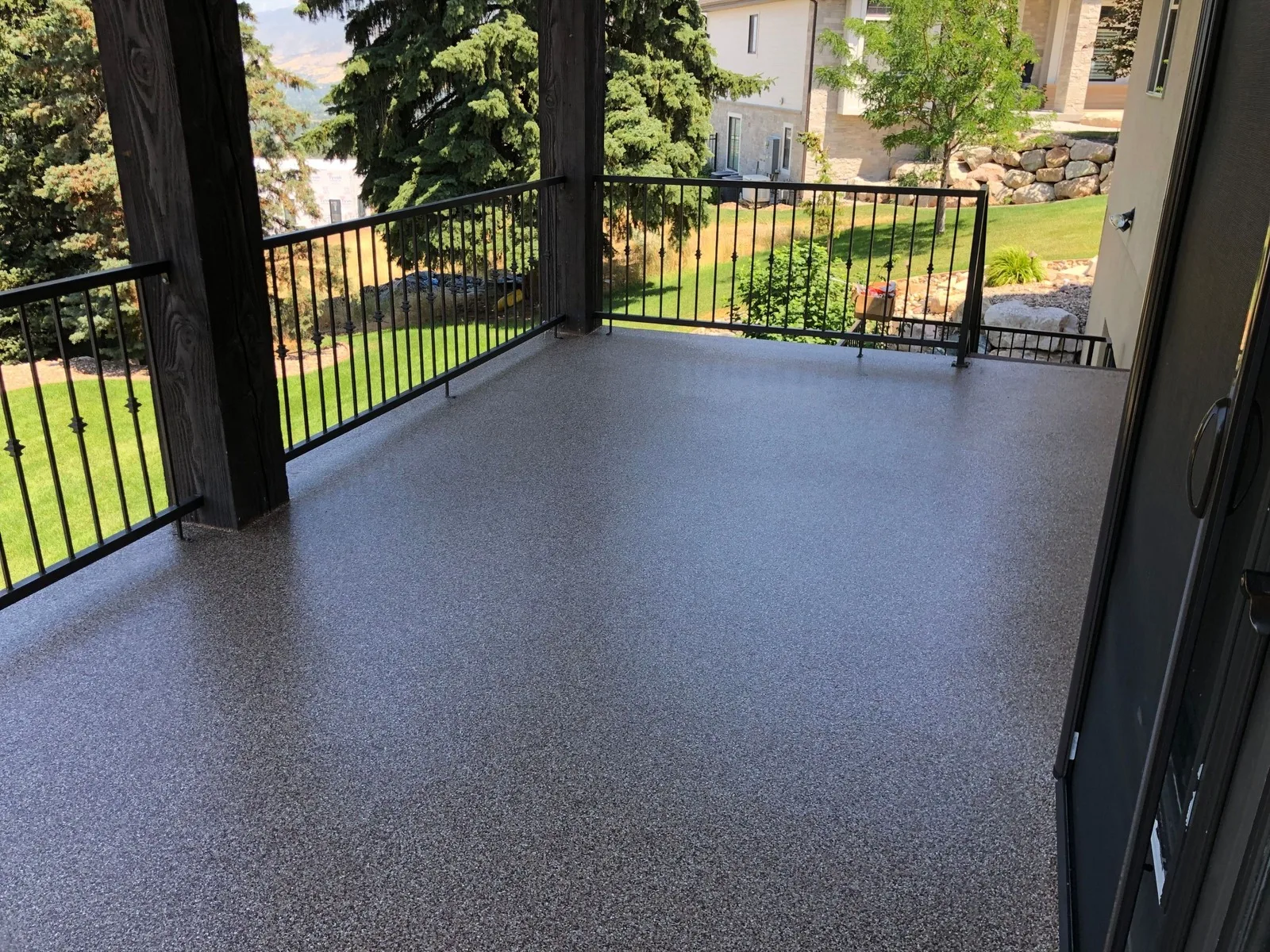
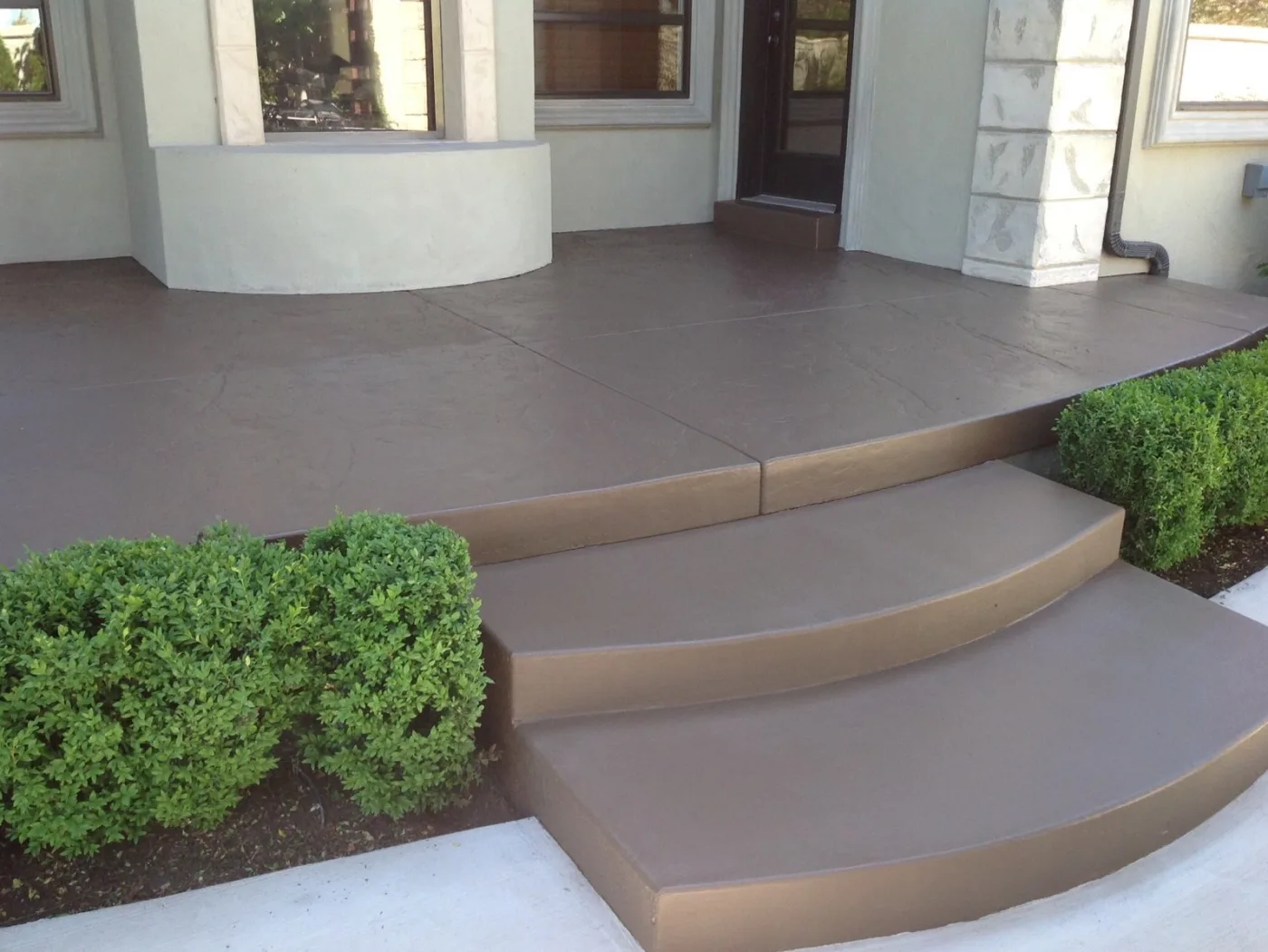
Finish comes next, and you pick it before we start. A broom texture matches the look of a standard concrete driveway or walkway. Knockdown gives a slightly raised, mottled texture that grips well when wet. A stamped look overlay copies tile, brick or stone patterns on a flat slab. Solid color and flake systems are common on porches, steps and covered patios. Borders, stencils and decorative color patterns are options on patios and porches. Everything gets a clear top coat rated for outdoor use. That coat carries the load from freeze thaw cycles, road salt and Utah sun. We apply every product to the manufacturer's specifications and pass on the manufacturer's warranty.
What does concrete resurfacing cost in Utah?
Price on a resurfacing job comes down to a few things we can see on site. Square footage is the big one, and larger slabs usually cost less per foot. Condition is next, because a slab with heavy spalling and many cracks takes more repair time. Prep method matters, since sandblasting an old sealed patio takes longer than grinding a bare one. The finish you pick changes it as well. A solid color costs less than a stamped look overlay with borders and 2 colors. Access counts too, because a backyard patio behind a narrow gate is slower to work. Indoor overlays add masking and dust control.
We give free estimates and come out to look at the surface in person. Photos hide soft spots and slab movement, so we check the concrete ourselves. If a slab should be replaced instead, we will say so, because an overlay over moving concrete fails. We have worked Davis County concrete since 2005, and salt damaged driveways come up every week. We resurface in Centerville, Bountiful, Farmington and Kaysville. We also run north to Layton and Ogden, and south through Salt Lake County. Call (801) 347-4518 Monday through Friday, 8am to 5pm to get on the schedule.