Garage floors and shop floors across Layton
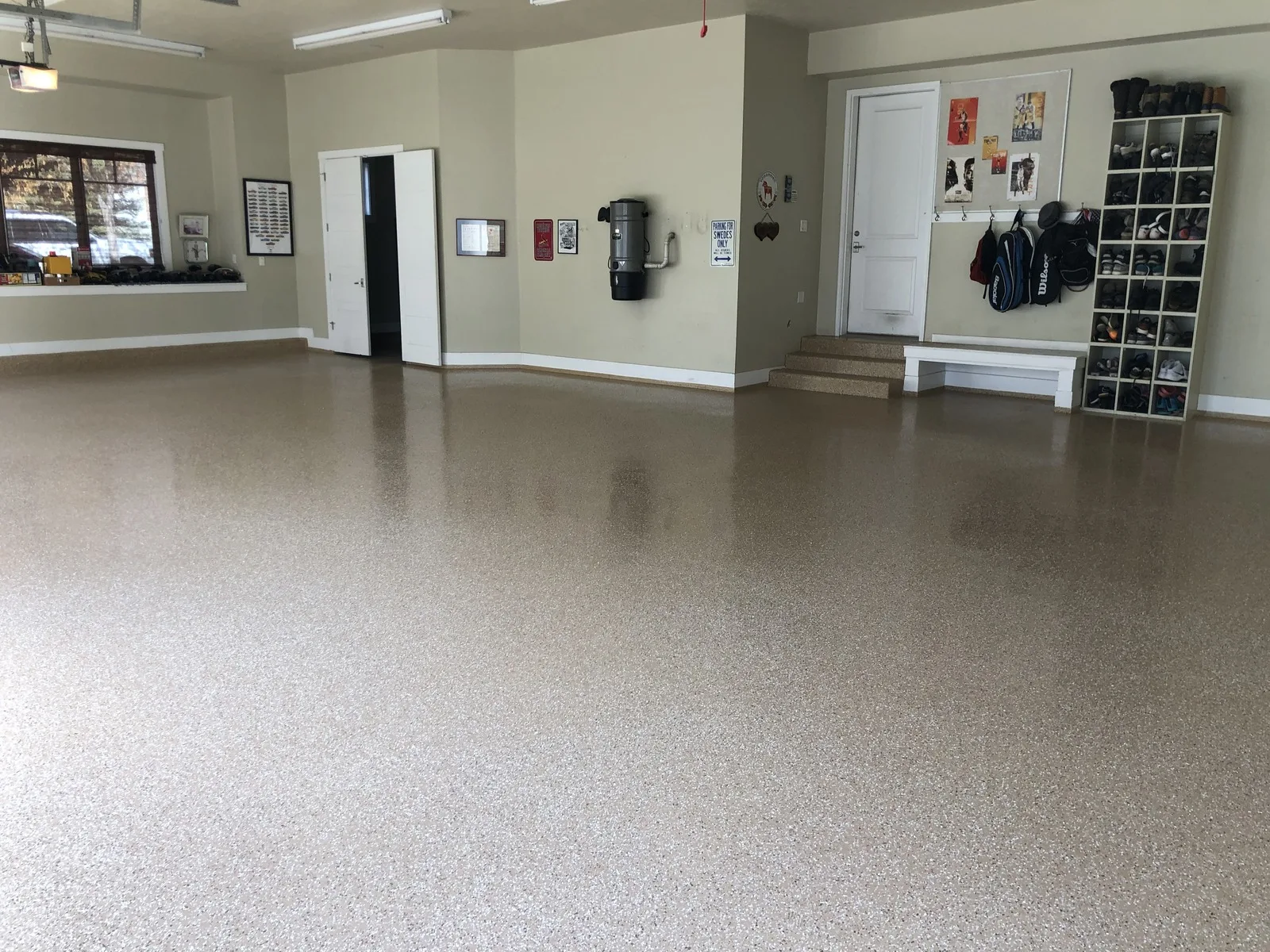
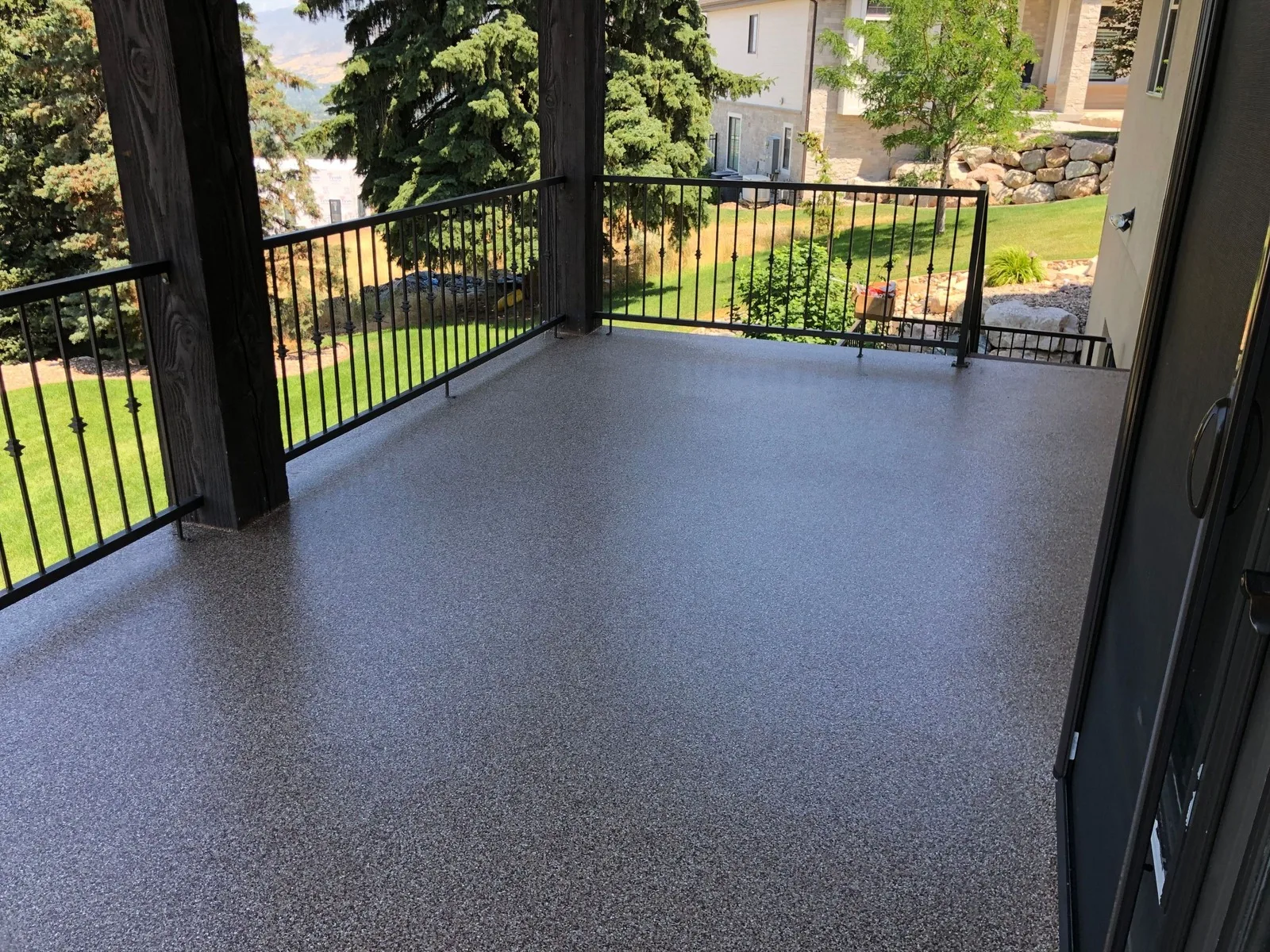
The garage floor is the biggest job we do in Layton homes. Layton has houses from the 1940s subdivisions through builds finished in the 2010s. Hill Air Force Base drove the growth here, and a lot of those homes went up fast for base families. On the East Layton bench, many of those garage slabs date to the 1970s and 1980s. Decades of wet tires and road salt have left them stained and pitted. We grind the surface first, so the coating bonds to bare concrete instead of old sealer. Cracks, pits and pop-outs get filled before any color goes down. Then the base coat goes on, followed by the flake or color layer and a clear top coat. Many garage floors are finished in 1 day.
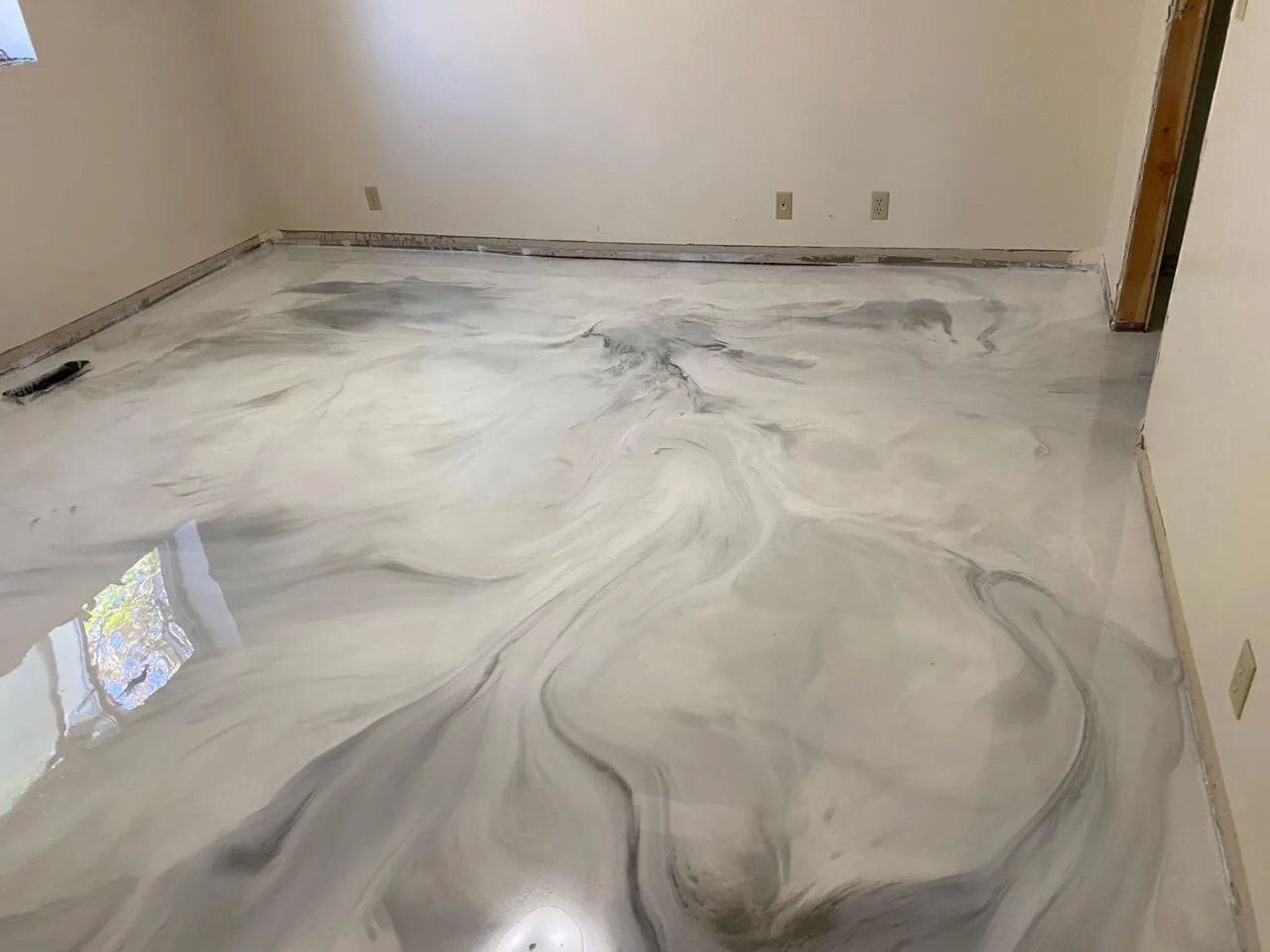
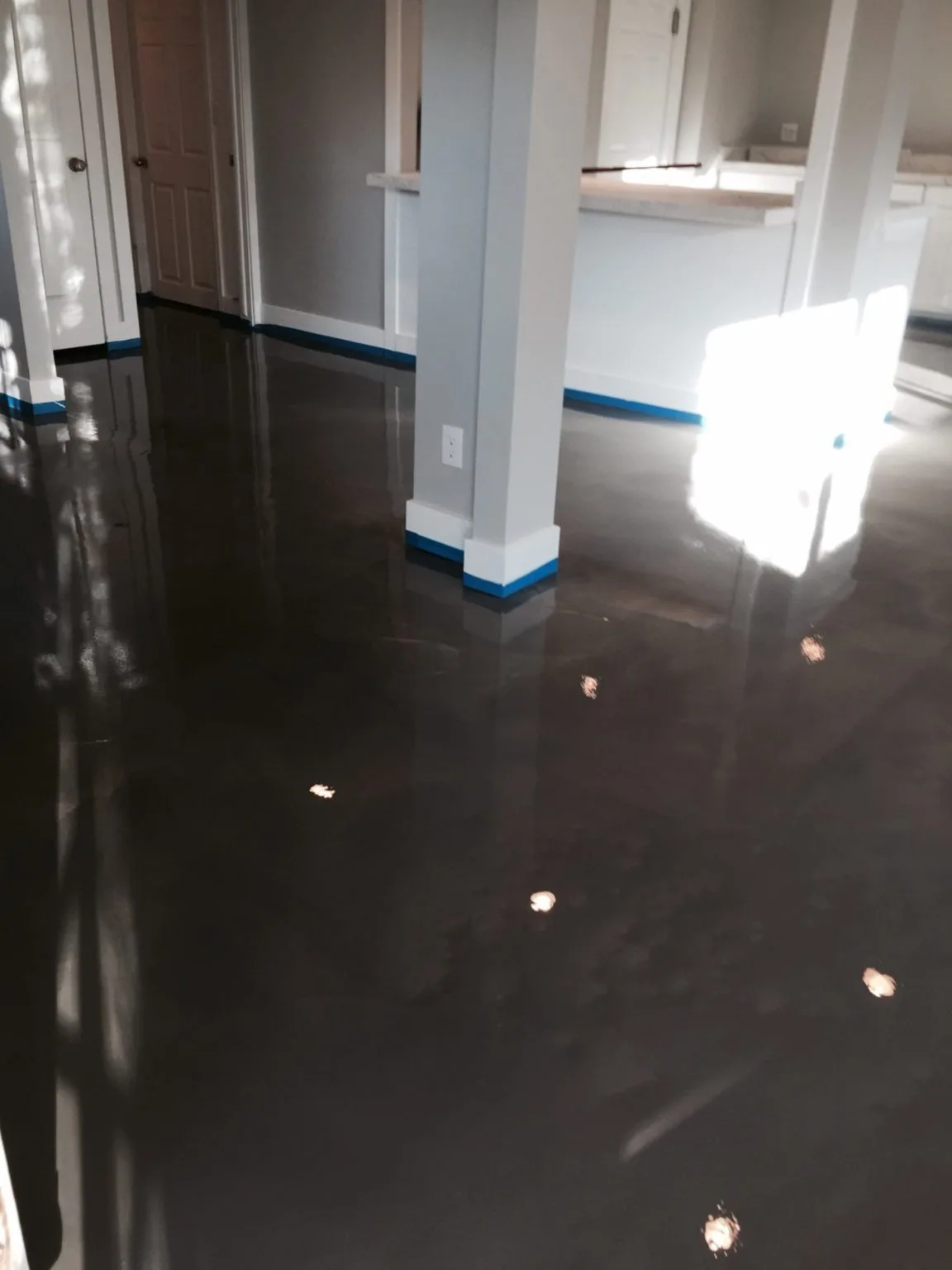
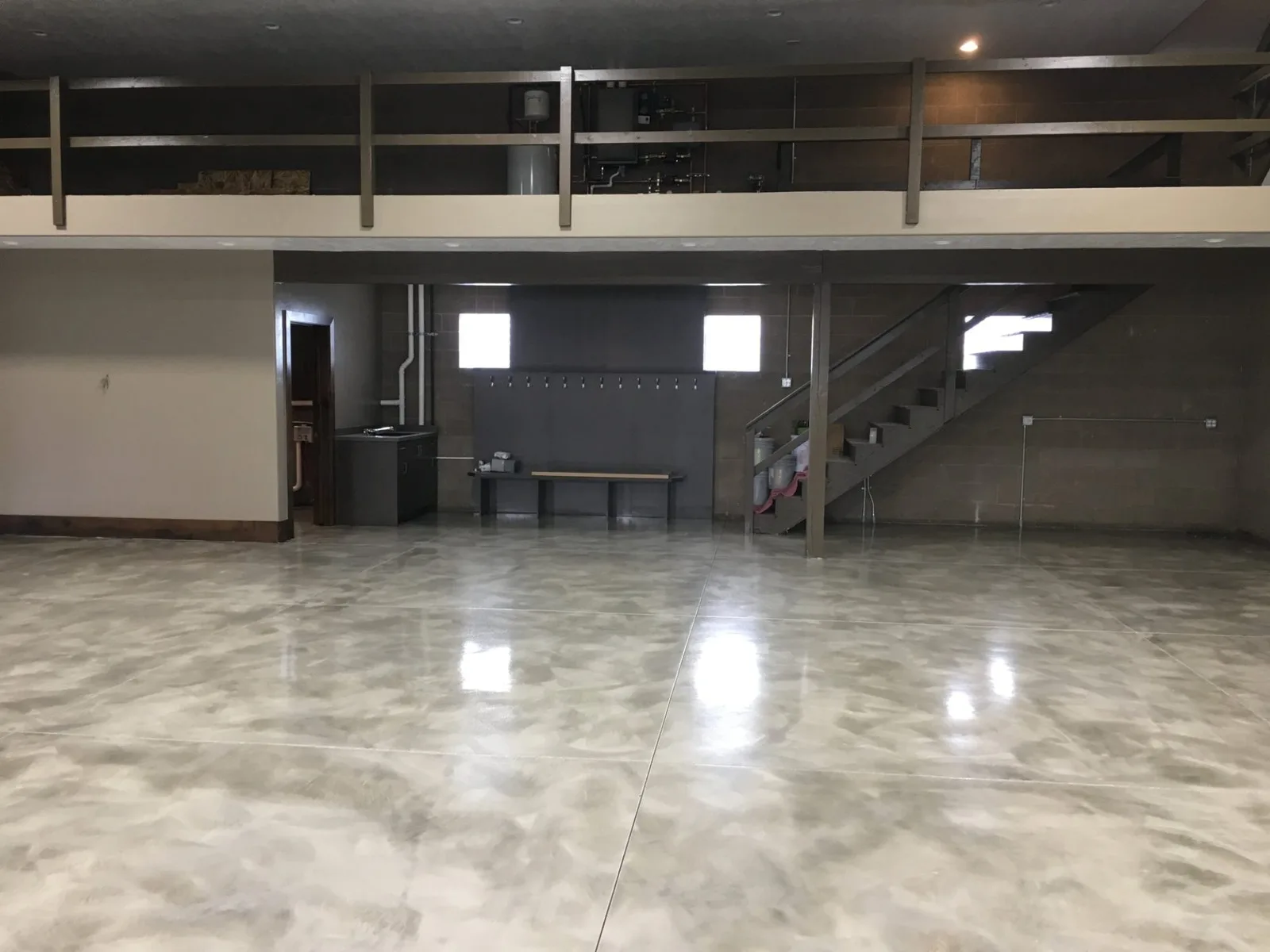
Shop floors and detached garages get a different mix. Those floors take dropped tools and oil, plus hot tires off I-15. We match the system to how the space gets used. A flake or polyaspartic finish holds up better than a big-box kit. If a DIY kit already peeled and picked up hot-tire marks, we grind it off and start over. Some owners want the marble look in a basement or a showroom, so we install metallic epoxy floors. When the slab is cracked or spalling, crack and spalling repair comes first, before any coating goes on. Laundry room floors and basement slabs run the same way.
Layton winters, road salt and concrete damage
Layton sits at about 4,459 feet, with the Wasatch Mountains right above the east bench. Winters are cold and snowy, and Great Salt Lake effect snow adds to the totals. The city averages somewhere between 43 and 52 inches of snow a year. December is the heaviest month, near 13.5 inches. Utah sees roughly 50 to 100 freeze-thaw cycles each winter. UDOT spreads about 236,000 tons of salt on state roads in a season. Antelope Drive and Hill Field Road both get that treatment, and the salt rides home on your tires. It drips off in the garage and soaks into the slab. The garage takes the worst of it, because the car parks over the same spot every night.
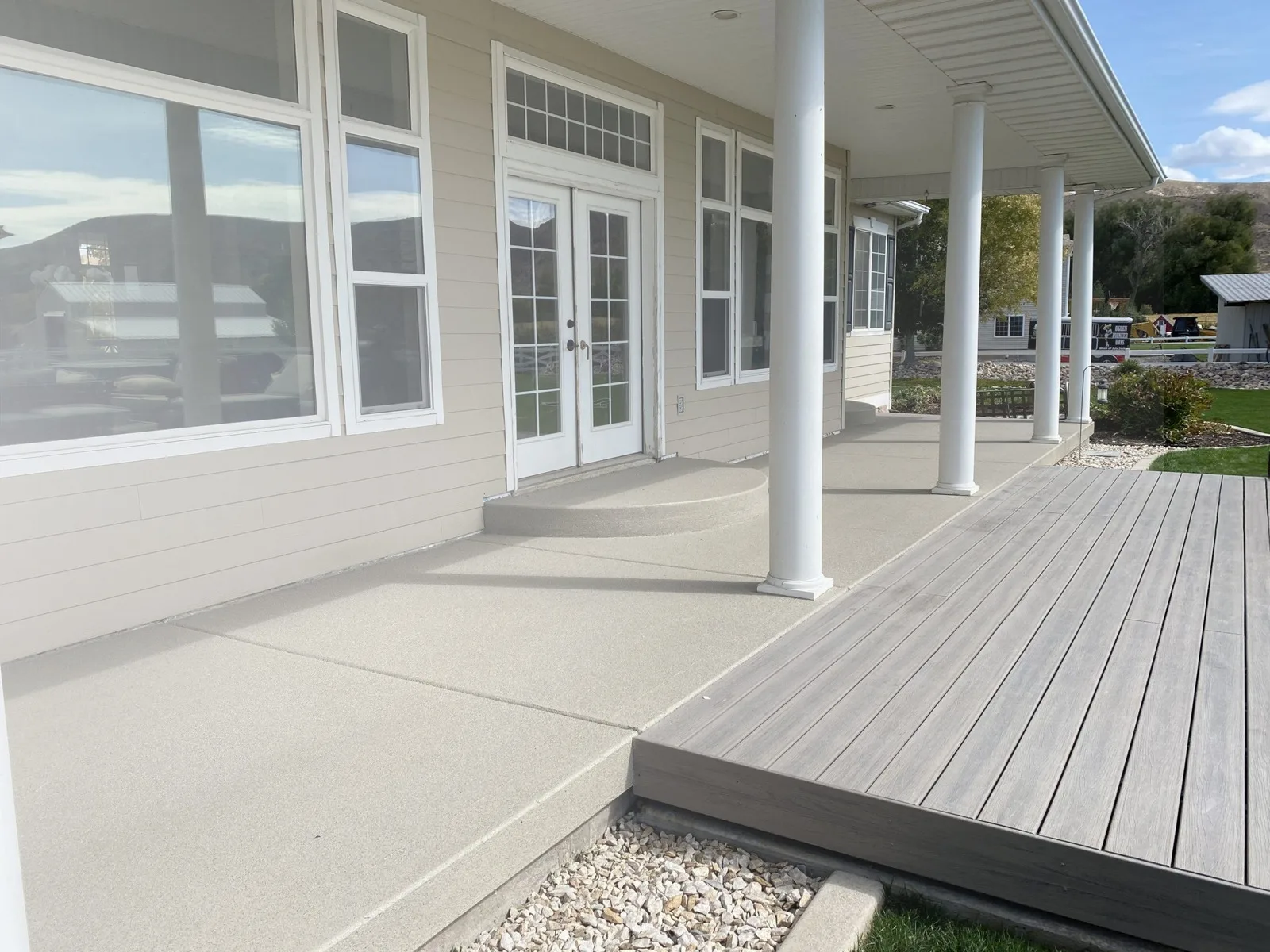
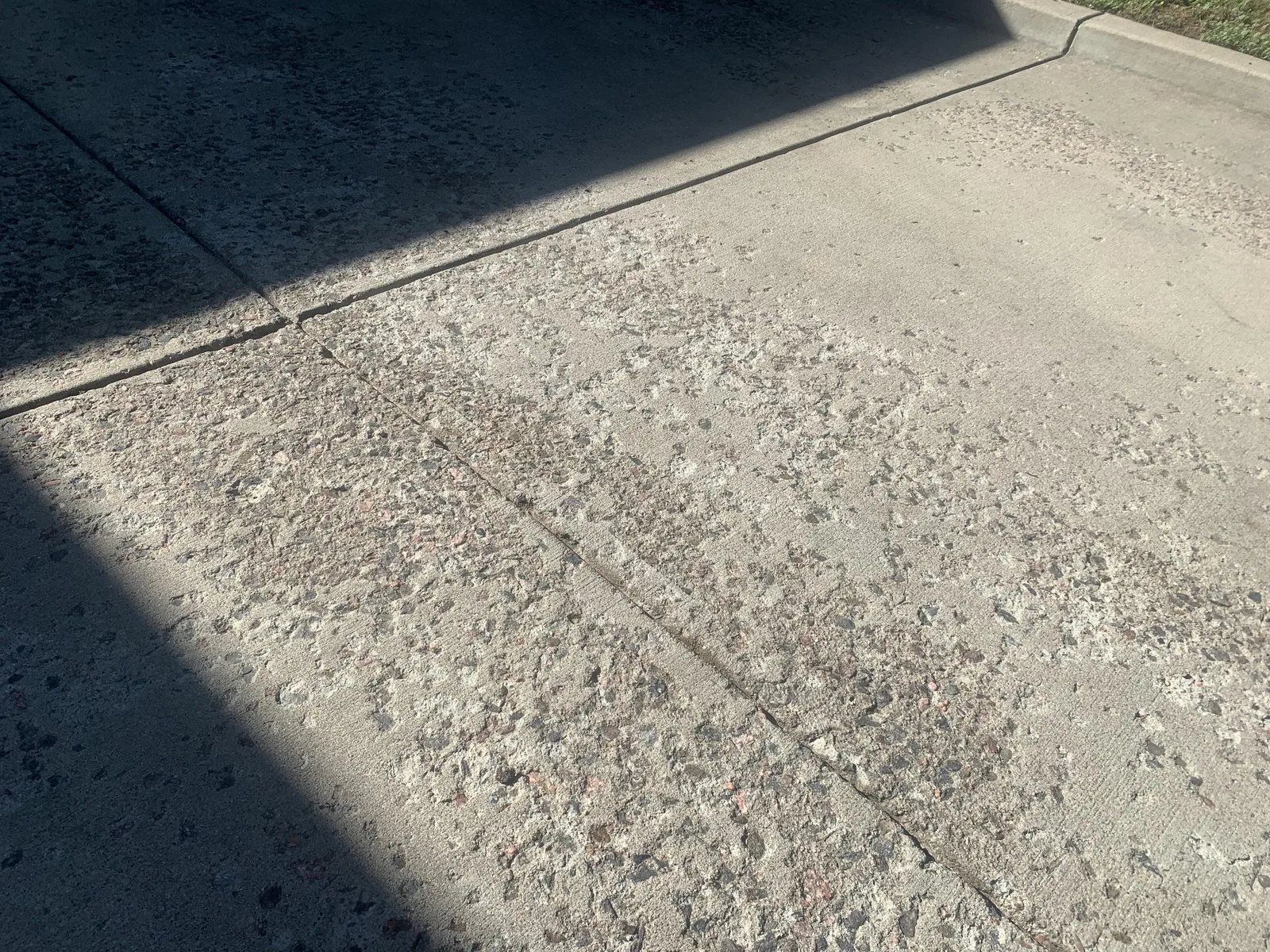
Salt water sits in the pores of the concrete and freezes. The ice pushes the surface apart, and you get flaking and pitting. Spalling shows up next, usually along driveway and porch edges. A coated floor stops the water at the top, so the salt never reaches the slab. Coated concrete also cleans up easier, so the salt and slush wash off instead of sitting there. Outside, concrete sealing is one way to slow the damage down. New concrete needs at least 30 days to cure before it can be sealed. For a driveway or patio that has already come apart, concrete resurfacing is an option. It recovers the surface for a lot less than a tear-out.
Communities & areas we serve around Layton: East Layton bench, Layton Hills Mall area, Antelope Drive corridor, Hill Field Road, Layton Commons, Kays Creek, West Layton, Adams Reservoir area, Oak Forest, Ellison Park.
Layton ZIP codes served: 84040, 84041.