
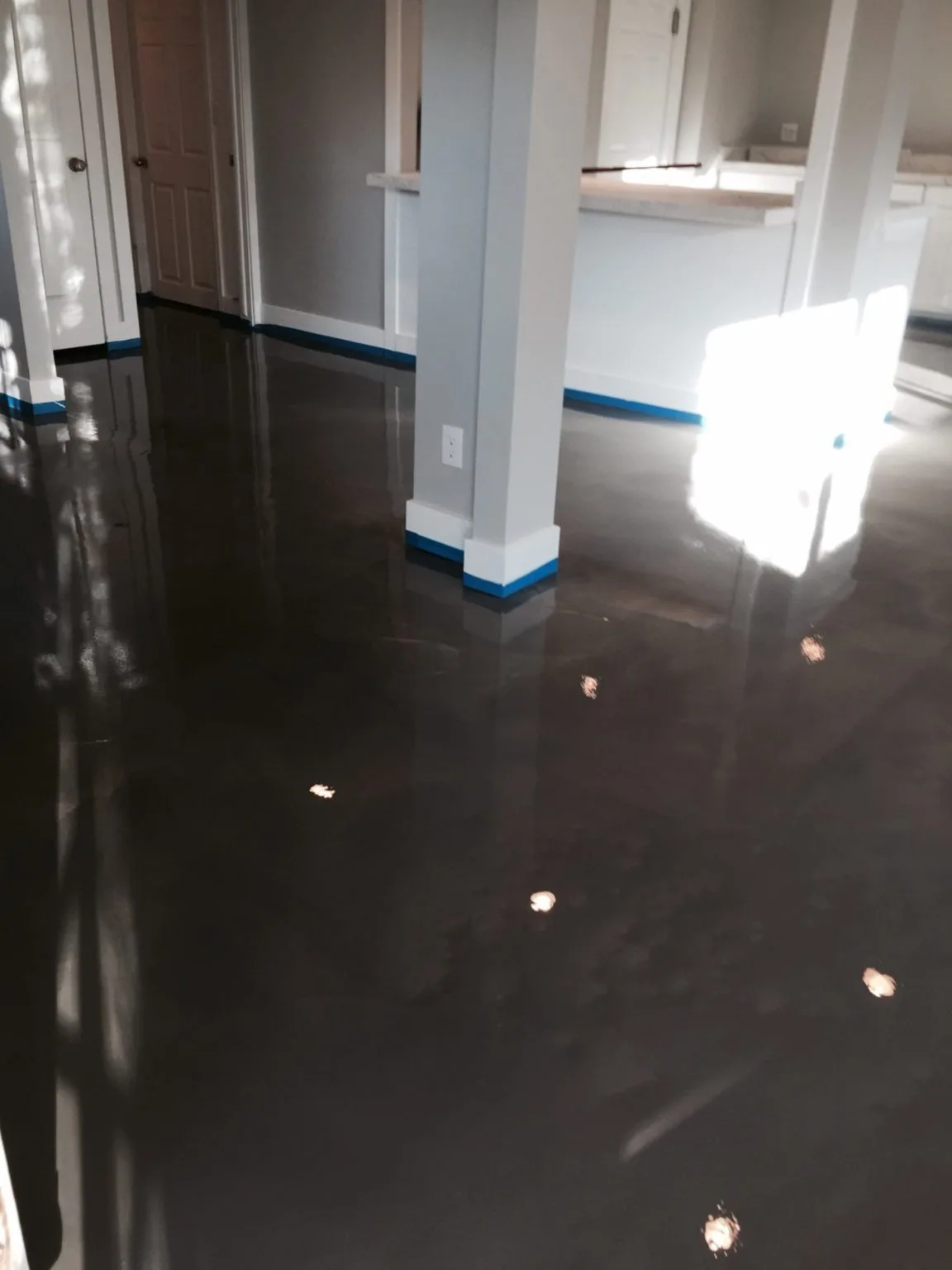
How much does it cost to epoxy a garage floor in Utah?
Published 2026 cost guides put a professionally installed epoxy garage floor at $3 to $12 per square foot, and Utah installers publish $4.50 to $9 for standard garage work. A two car garage along the Wasatch Front usually lands between $2,400 and $4,000 for a flake system. Prep, repair and the top coat you pick move the number.
Every figure on this page is market data from published guides and installer price pages. None of it is a quote from us. We price garage floor coatings in Centerville after we see the slab, and that visit is free.
What do Utah installers charge per square foot?
Utah pricing sits inside the national range, a little above the bottom of it. Four Utah installers publish per square foot numbers, and they converge on $4.50 to $9 for a standard flake garage floor. The national guides run wider because they cover everything from a bare solid color to a metallic floor.
| System | National guides | What Utah installers publish |
|---|---|---|
| Solid color epoxy | $3 to $7 per sq ft | $4.50 to $6 per sq ft |
| Epoxy with flake | $5 to $10 per sq ft | $5 to $8 per sq ft |
| Full polyaspartic or polyurea | $7 to $12 per sq ft | $6 to $9 per sq ft |
| Metallic epoxy | $8 to $12 per sq ft | $12 and up per sq ft |
| DIY kit, materials only | $2 to $5 per sq ft | same |
The national column comes from HomeAdvisor, Bob Vila, This Old House and Craftsman Concrete Floors. The Utah column comes from installer price pages in Utah County, Ogden and Salt Lake City, so treat it as what contractors publish rather than a survey. Homewyse sits above everyone at $7.78 to $12.71 per square foot, and we would call that an outlier.
What does a 2 car or 3 car garage cost?
Size sets the base. A single bay is 200 to 250 square feet. A two car garage runs 400 to 500. A three car garage runs 600 to 750. Bigger floors usually cost a little less per square foot, because the grinder and the crew are already on site.
| Garage size | National range | Utah installer range |
|---|---|---|
| 1 car, 200 to 250 sq ft | $700 to $3,000 | about $1,000 to $2,000 |
| 2 car, 400 to 500 sq ft | $1,500 to $6,000 | $1,800 to $2,800 basic, $2,400 to $3,600 flake |
| 2 car in Salt Lake City | $2,500 to $5,500 | |
| 3 car, 600 to 750 sq ft | $2,200 to $9,500 | about $3,000 to $5,500 |
| Metallic, 2 car | $3,200 to $6,000 | $4,800 and up |
The Utah one car and three car figures are our math from the published per square foot rates, not a quoted range. The two car numbers are published directly by Utah installers.
What moves the price up or down?
Prep is the swing factor. A clean, flat slab that only needs diamond grinding sits at the low end. A slab with salt damage near the door, wide cracks and a failed store kit sits at the high end, because all of that has to come off or get fixed before any color goes down. Today’s Homeowner prices grinding or sandblasting at $2 to $5 per square foot on its own. Picking the color itself is a separate decision, and choosing a garage floor epoxy color walks through it.
Repair is the next line. Craftsman Concrete Floors prices crack and spall repair at $250 to $750 per project. One Ogden installer publishes Utah numbers: floor damage repair at $75 to $199 per spot, expansion joint fill at about $112 for a two car garage, and $1 per square foot to remove an old epoxy or polyaspartic coating. On a Wasatch Front driveway apron that has taken years of road salt, the repair line can be bigger than people expect. That work is covered on our concrete repair page.
Moisture is the quiet one. Moisture vapor pushing up through the slab is a documented cause of peeling, and a moisture test runs $200 to $500. A damp slab needs a vapor barrier coat under the color, which adds material.
Then the system. Solid color is the cheapest. Flake adds material and a scrape pass. A polyaspartic top coat costs more per gallon than an epoxy top coat. Metallic takes more hand work and more cure days, which is why it prices near double a flake floor.
Access and shape finish the list. Steps, coved edges, a tight side door and a garage full of shelving all add hours.
Why a store kit is not the cheap option
A big box kit costs $50 to $600, and the temptation is real. The problem is in the manufacturer’s own paperwork. Rust-Oleum’s data sheet for its EpoxyShield garage floor coating lists a recommended film of 3.0 to 3.5 mils per coat, a single coat as normal, coverage of about 250 square feet per kit, and prep by acid etch rather than grinding. The same sheet says the product is not intended for floors with a moisture problem.
Run the numbers on a 450 square foot garage. That is two kits, roughly 3 mils of coating, over a floor that was etched instead of ground. Professional flake systems are 100 percent solids and build to 20 mils or more. Penntek’s chip system, for one, is 22 to 26 mils. The store kit is close to a coat of paint.
That is why kits fail the way they do. Hot tires soften a thin water based film, grip it as they cool, and pull it up when the car backs out. Acid etch leaves residue and a shallow profile, so the bond was never strong. Cost guides put kit life at 1 to 3 years. One Utah installer puts it at 2 to 5 in our climate. A professional floor is rated 10 to 20 years, and we grind off failed kits every week. The cheap floor gets paid for twice.
Is a polyaspartic top coat worth the extra money?
In a Utah garage, usually yes. Standard epoxy ambers under sun, and one coatings company describes a distinct yellow line where the sun hits the apron inside 12 to 24 months. Polyaspartic is UV stable and holds its color. It also cures fast. A polyaspartic top coat takes vehicles in about a day, where epoxy guides say 3 to 7 days.
The premium is real but not huge. HomeGuide prices epoxy at $4 to $10 per square foot and polyaspartic at $5 to $12, a gap of $1 to $2. Other guides show a wider $3 to $4 gap between a basic epoxy floor and a full polyurea system. On a two car garage that is a few hundred dollars for a floor that is rated 15 to 25 years instead of 5 to 10. The trade offs between the two chemistries are in our post on epoxy versus polyaspartic garage floors.
Why Utah garages cost a little more to prep
Road salt is the reason. Snowmelt off the car carries chloride brine onto the slab all winter. Salt infused concrete holds more water, that water freezes, and the surface spalls into chips and pits. A garage that has taken a few Wasatch Front winters uncoated needs more grinding and more patching than the same garage in a dry climate. Salt Lake City sits at about 4,300 feet, and one Utah installer notes the extra UV at elevation wears coatings faster than lower markets, which is another argument for the UV stable top coat.
Prep standards matter here too. Utah installers who grind with diamond tooling create the profile a coating needs. Acid etching alone cuts corners, and it shows up as peeling a year later. How long a floor lasts in this climate, and what shortens it, is covered in how long a garage floor coating lasts in Utah.
How to get a real number
Square footage and system choice get you a ballpark from the tables above. The rest needs eyes on the slab. We measure the garage, check for moisture, look at cracks and salt damage near the door, and ask how you use the space. Then you get a written price for that floor, with the top coat and the repair work spelled out.
Estimates are free, and we come to the property. Call (801) 347-4518 Monday through Friday, 8am to 5pm, or send the form on our garage floor coatings page.
If you are still deciding between a coating and bare polished concrete, read how polished concrete compares with epoxy on cost and wear before you get quotes.